
How to Choose the Right Barrier Packaging for Food Products (Moisture, Oxygen, and Shelf Life)
Last Updated on August 4, 2026 by Kira Andrus
Moisture, Oxygen, and Shelf Life: Explained
Barrier packaging plays a critical role in how food products look, taste, and perform over time. Whether you’re packaging baked goods, snacks, or specialty items, the right materials can extend shelf life, preserve freshness, and protect product quality from production to purchase.
This guide breaks down how barrier packaging, vapor barrier packaging, and high barrier packaging work so you can make informed decisions based on your product, environment, and goals.
What Is Barrier Packaging?
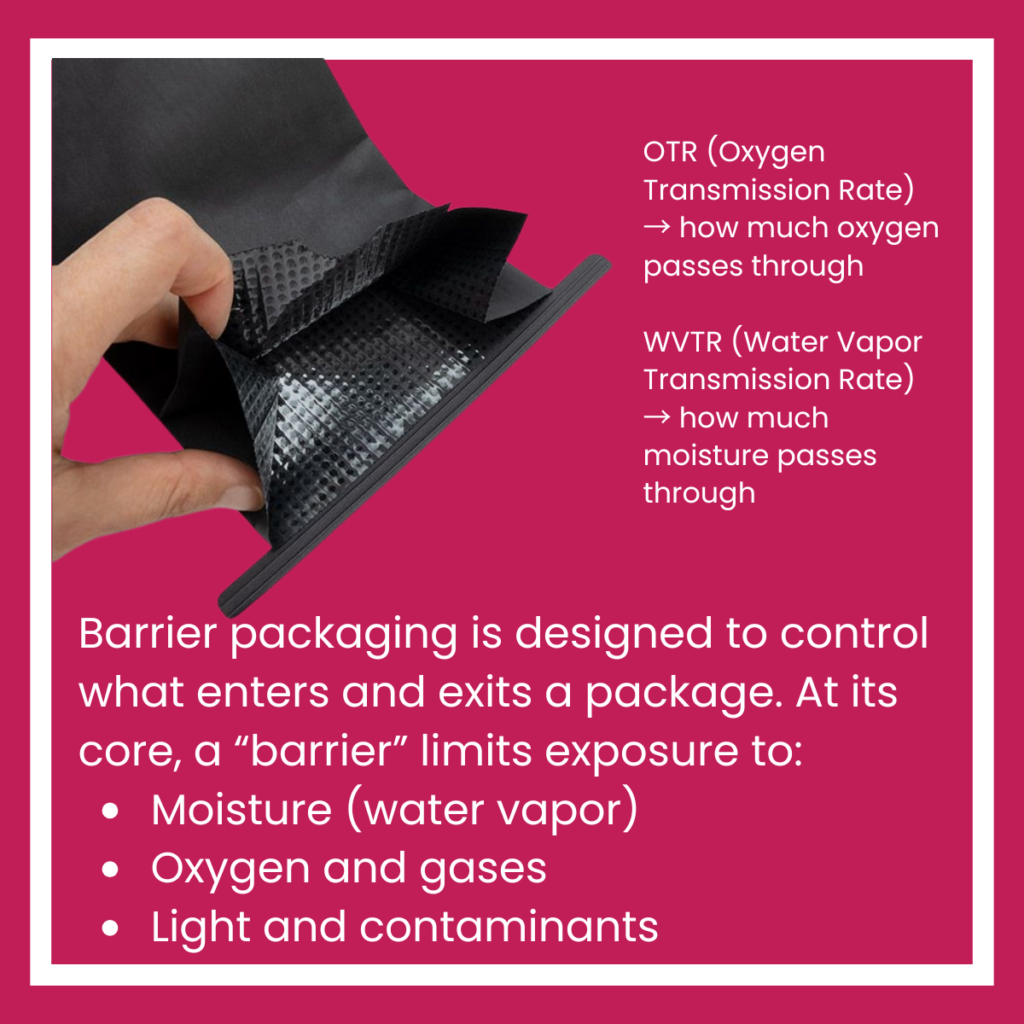
Barrier packaging is designed to control what enters and exits a package. At its core, a “barrier” limits exposure to:
- Moisture (water vapor)
- Oxygen and gases
- Light and contaminants
Why it matters:
A well-designed barrier helps:
- Keep flavors and aromas inside
- Keep moisture and oxygen out
- Maintain product integrity and shelf stability
Barrier performance is typically measured by:
- OTR (Oxygen Transmission Rate) → how much oxygen passes through
- WVTR (Water Vapor Transmission Rate) → how much moisture passes through
Lower rates = stronger protection
Why Barrier Packaging Matters for Food Products
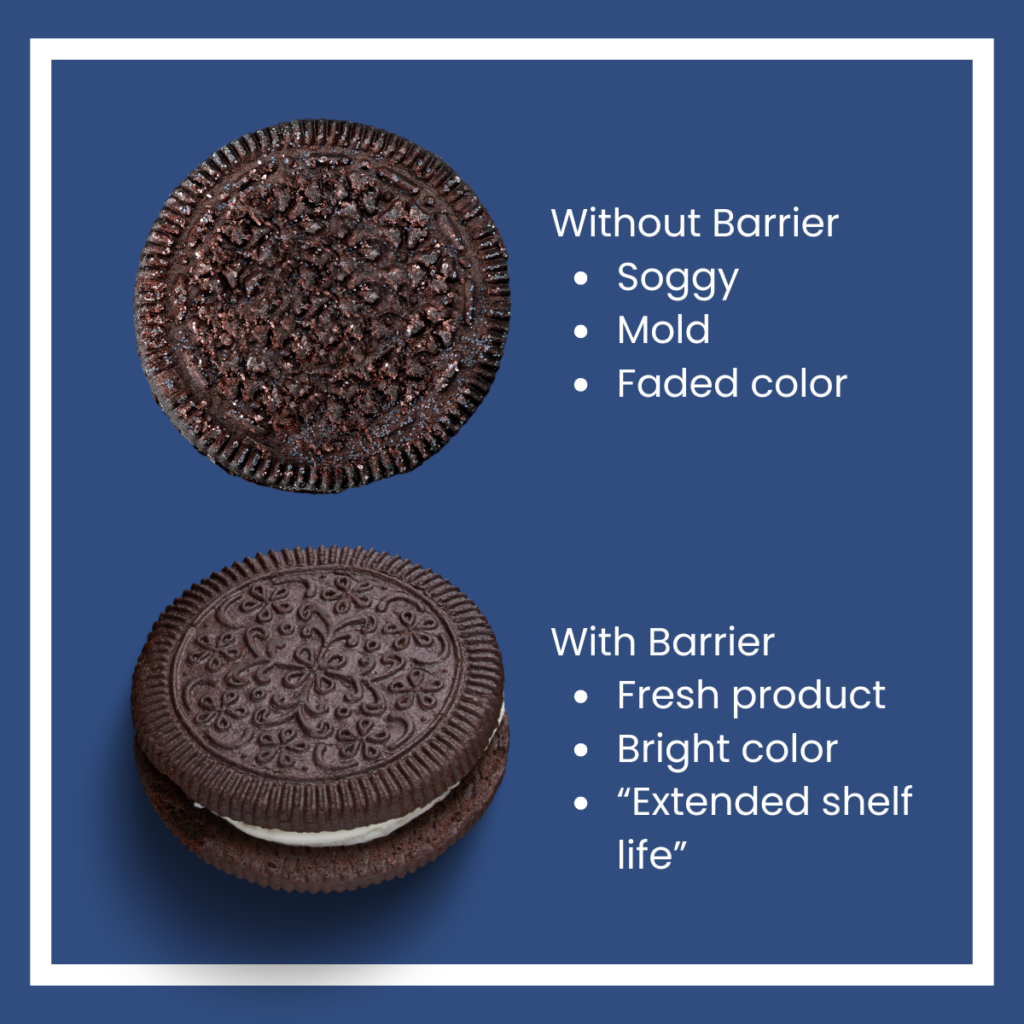
Think of barrier packaging as your product’s first line of defense.
Without it:
- Texture breaks down (crispy → stale, soft → soggy)
- Oxygen causes oxidation and rancidity
- Moisture introduces mold risk
- Flavor and aroma degrade
With the right barrier:
- Shelf life is extended
- Products travel safely
- Retail presentation stays consistent
- Customer experience improves
Moisture Barrier Packaging: Protecting Texture & Stability
Moisture is one of the biggest threats to food quality.
It can cause:
- Staleness in baked goods
- Mold growth in humid conditions
- Texture breakdown in dry snacks
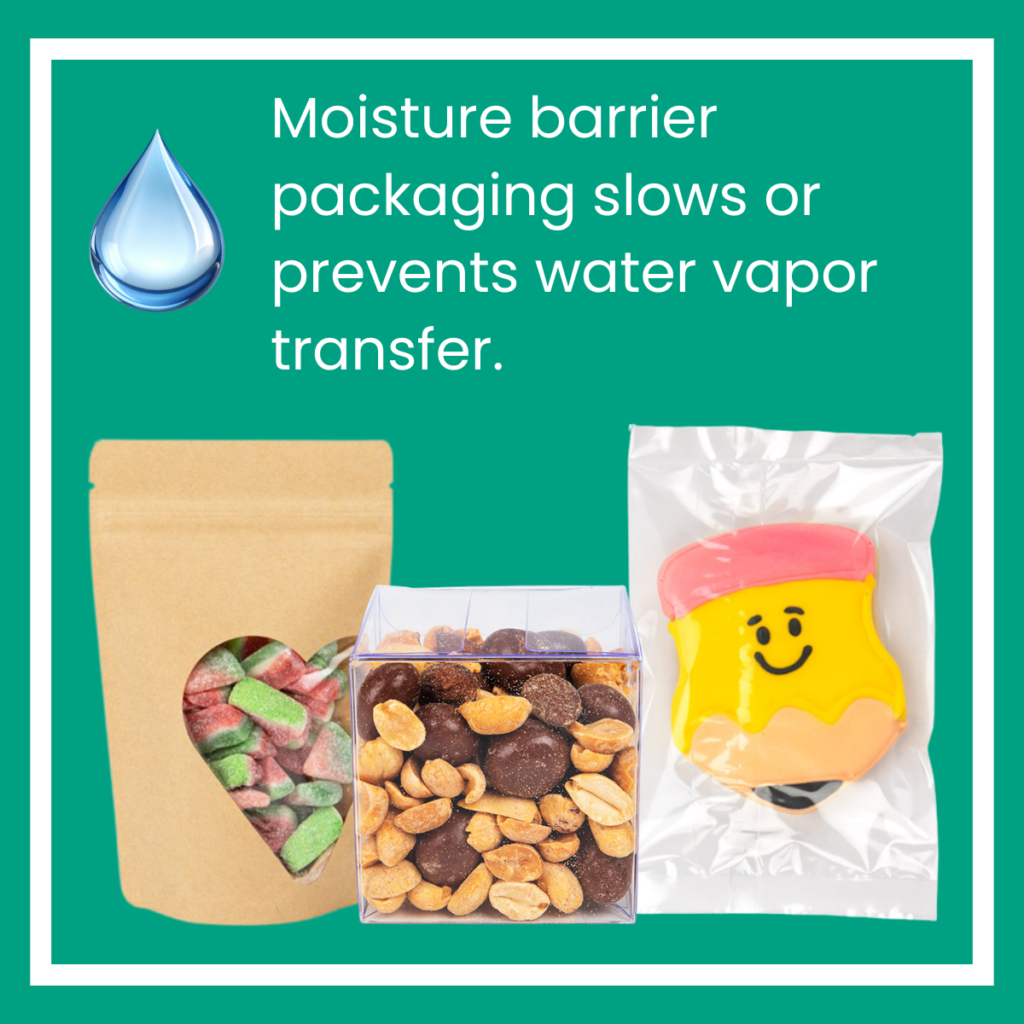
Moisture barrier packaging slows or prevents water vapor transfer.
This type of packaging is best for baked goods, powders and mixes, as well as crackers and dry snacks.
Common materials:
- Polyethylene (PE) → flexible, strong moisture barrier
- Polypropylene (PP/BOPP) → clarity + moderate moisture protection
This is usually seen in clear poly bags and gusseted bags for bulk or bakery items.
Oxygen Barrier Packaging: Preserving Freshness & Flavor
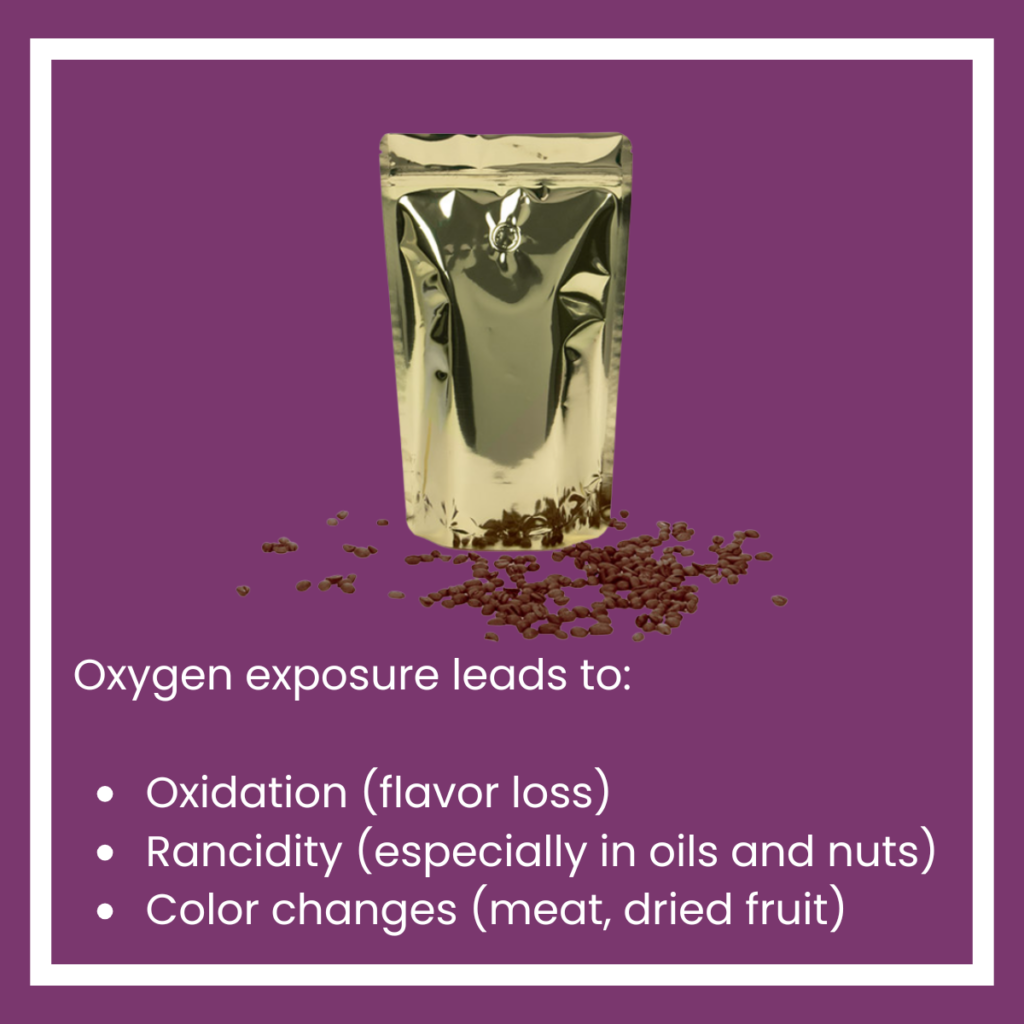
Oxygen exposure leads to:
- Oxidation (flavor loss)
- Rancidity (especially in oils and nuts)
- Color changes (meat, dried fruit)
Oxygen barrier packaging slows this process.
Key materials:
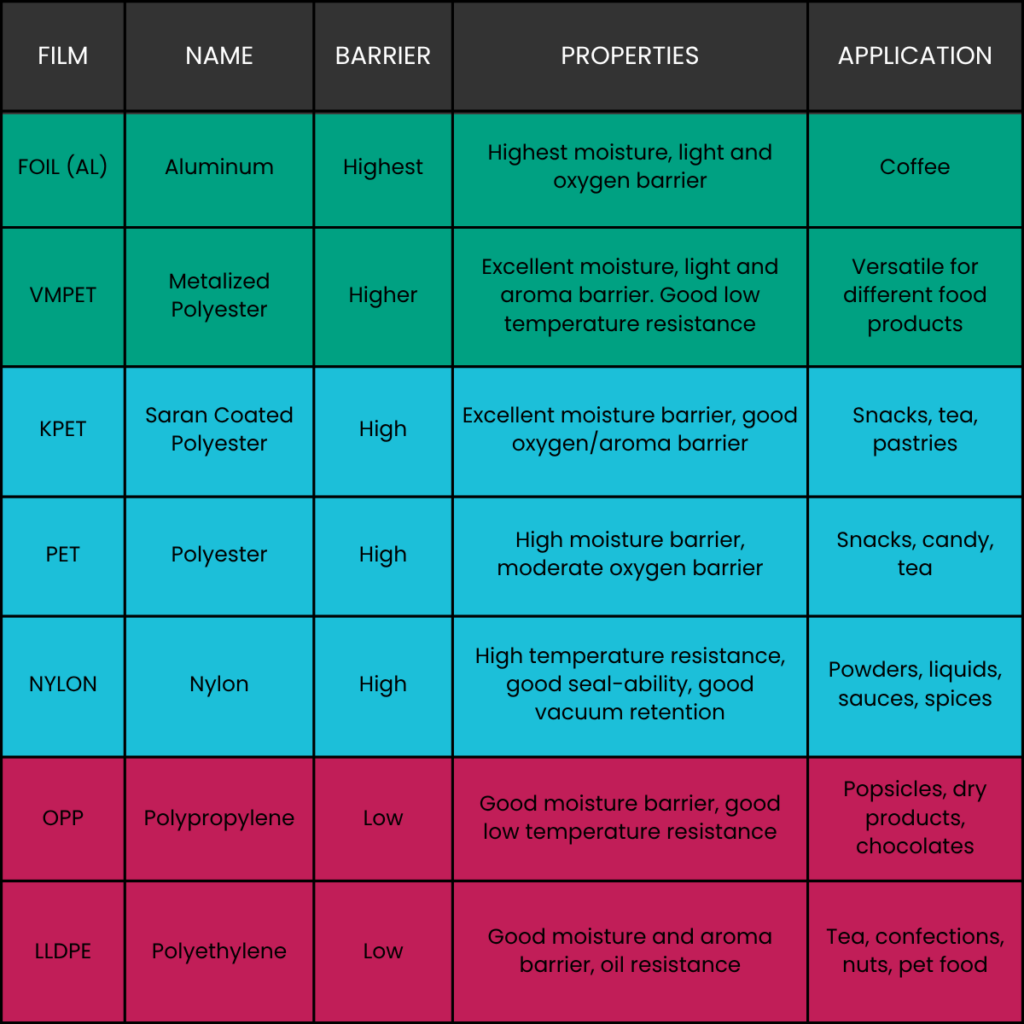
- PET (Polyethylene Terephthalate) → strong oxygen barrier
- Laminated films → enhanced protection
- Metallized layers → block oxygen and light
This type of packaging is used for nuts, coffee, jerky, and dried fruits.
What Is High Barrier Packaging?
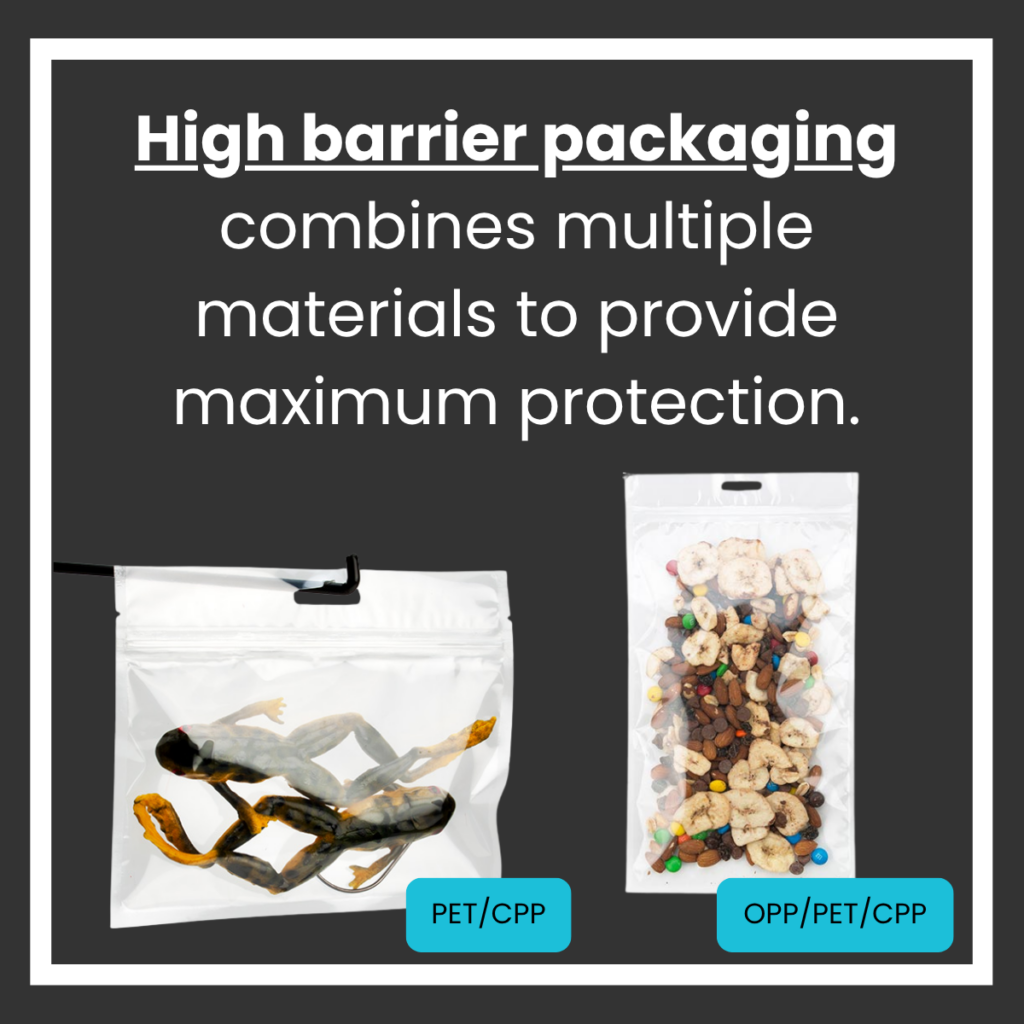
High barrier packaging combines multiple materials to provide maximum protection. It goes beyond standard films by protecting against:
- Moisture
- Oxygen
- Light
- Aromas
Typical structures include:
- PET/PE laminates
- Metallized films (VMPET)
- Aluminum foil layers (AL)
Aluminum-based structures can significantly extend shelf life.
When to use high barrier packaging:
- Long shelf life products
- Premium or sensitive goods
- Highly aromatic items (coffee, spices, jerky)
Vapor Barrier Packaging vs Standard Packaging
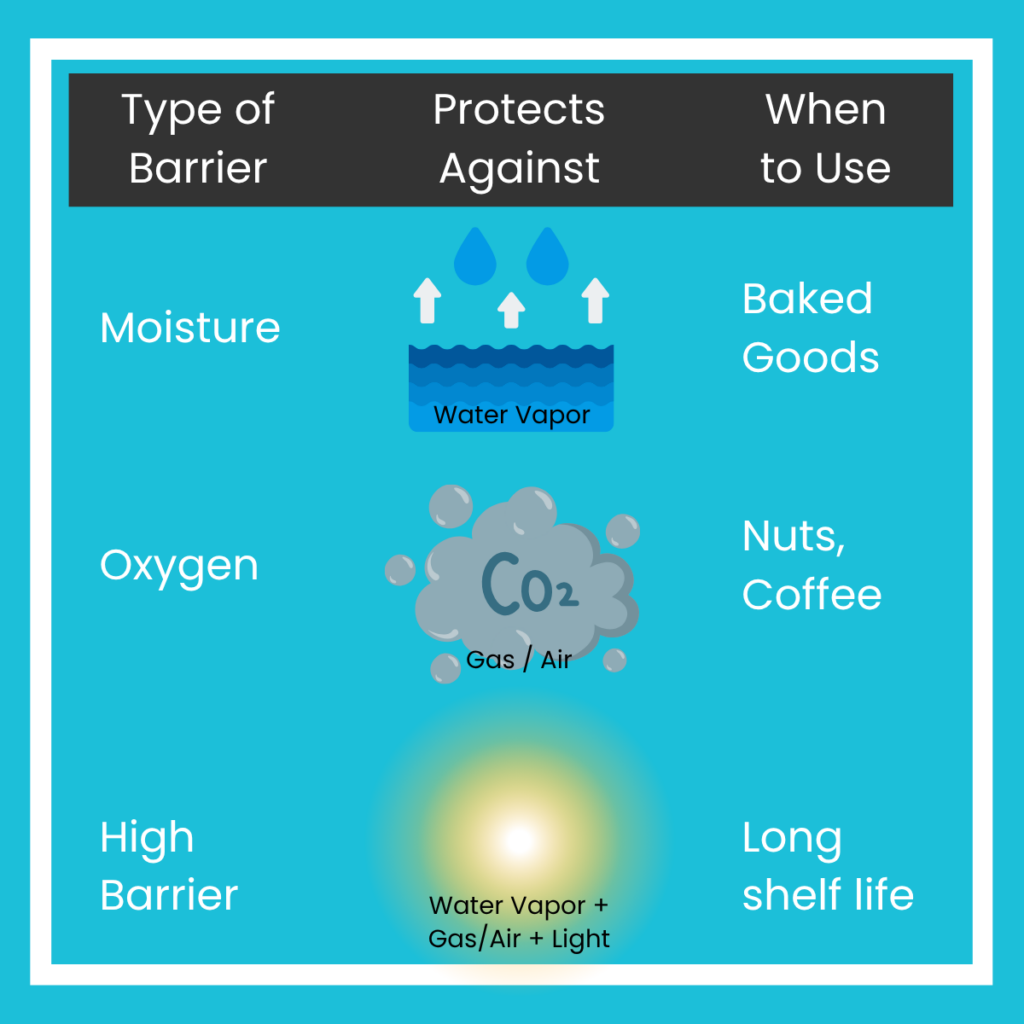
Not all barriers are created equal. Vapor barrier packaging focuses specifically on controlling moisture transfer (WVTR), while oxygen barrier packaging focuses on limiting gas exchange (OTR).
When you need each:
- Moisture-sensitive product? → Vapor barrier
- Oxidation-sensitive product? → Oxygen barrier
- Both risks present? → High barrier (multi-layer solution)
Barrier Coatings for Paper Packaging
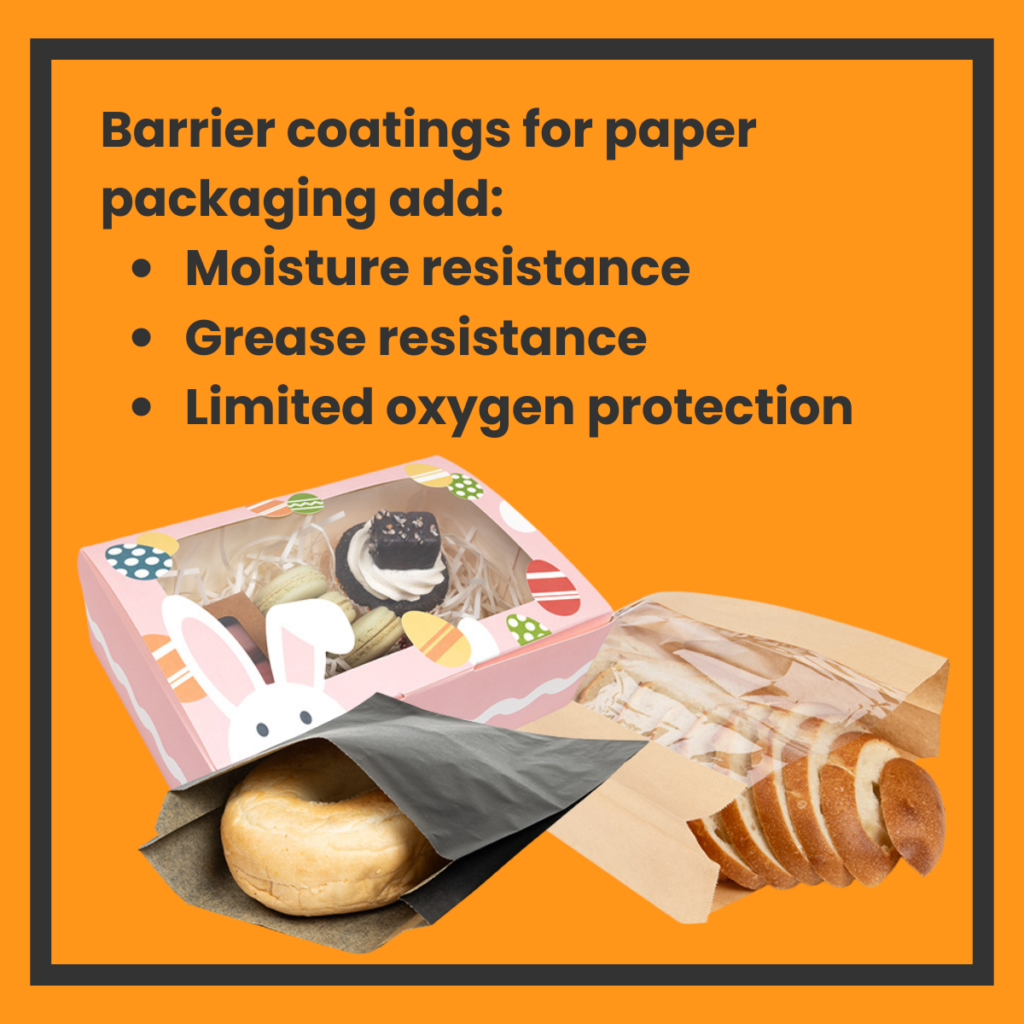
Paper-based packaging can also provide barrier protection when paired with the right coatings.
Barrier coatings for paper packaging add:
- Moisture resistance
- Grease resistance
- Limited oxygen protection
Why businesses use it:
- Supports sustainability goals
- Maintains a natural, premium look
- Works well for short shelf-life items
Best for:
- Bakery packaging
- Quick-serve foods
- Takeout and ready-to-eat items
How to Choose the Right Barrier Packaging
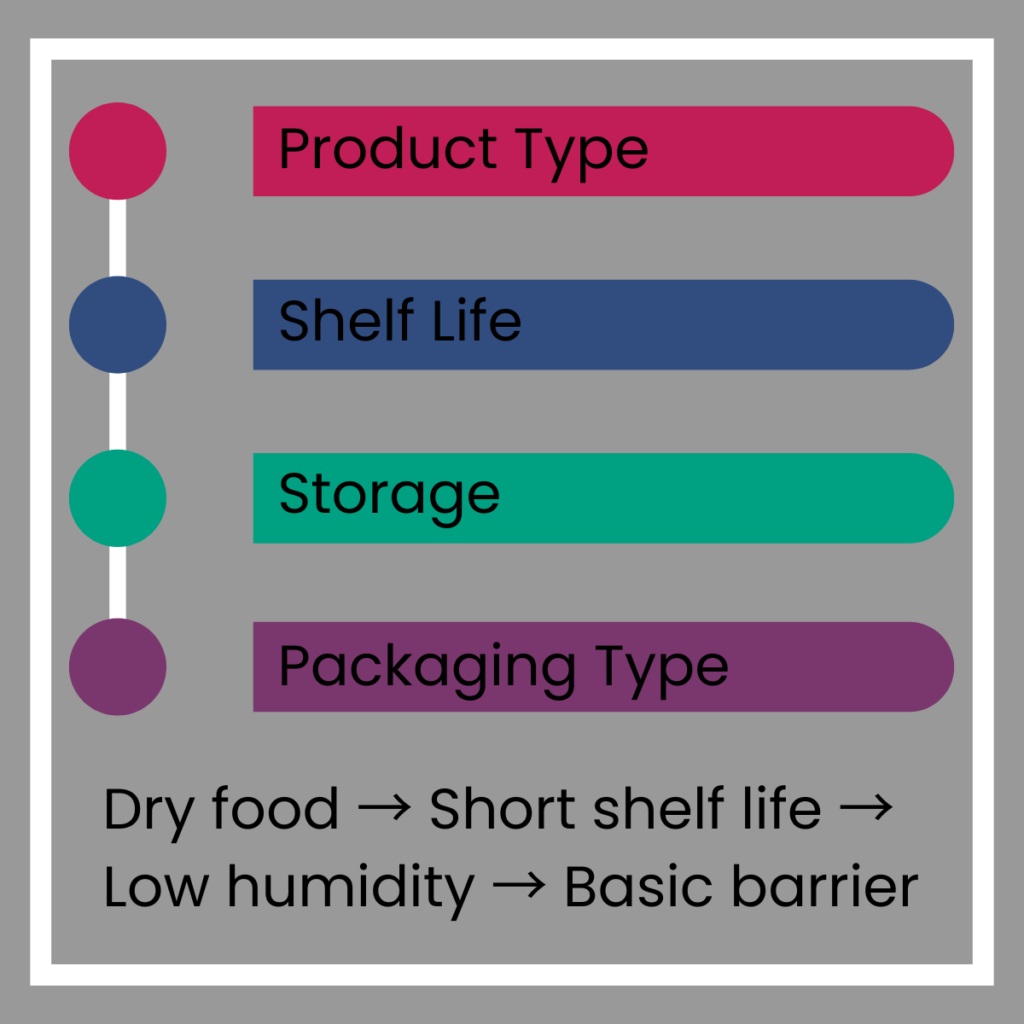
- Product Type
- Dry foods → moisture barrier
- Oily/fatty foods → oxygen barrier
- Sensitive products → high barrier
- Shelf Life Requirements
- Short-term → basic or moderate barrier
- Long-term → high barrier packaging
- Storage Conditions
- High humidity → stronger vapor barrier
- Temperature fluctuations → multilayer films
- Air exposure → oxygen barrier
- Packaging Format
- Flat bags → simple applications
- Gusseted bags → volume + shelf display
- Heat seal bags → added protection + tamper resistance
Breaking Down Barrier Levels
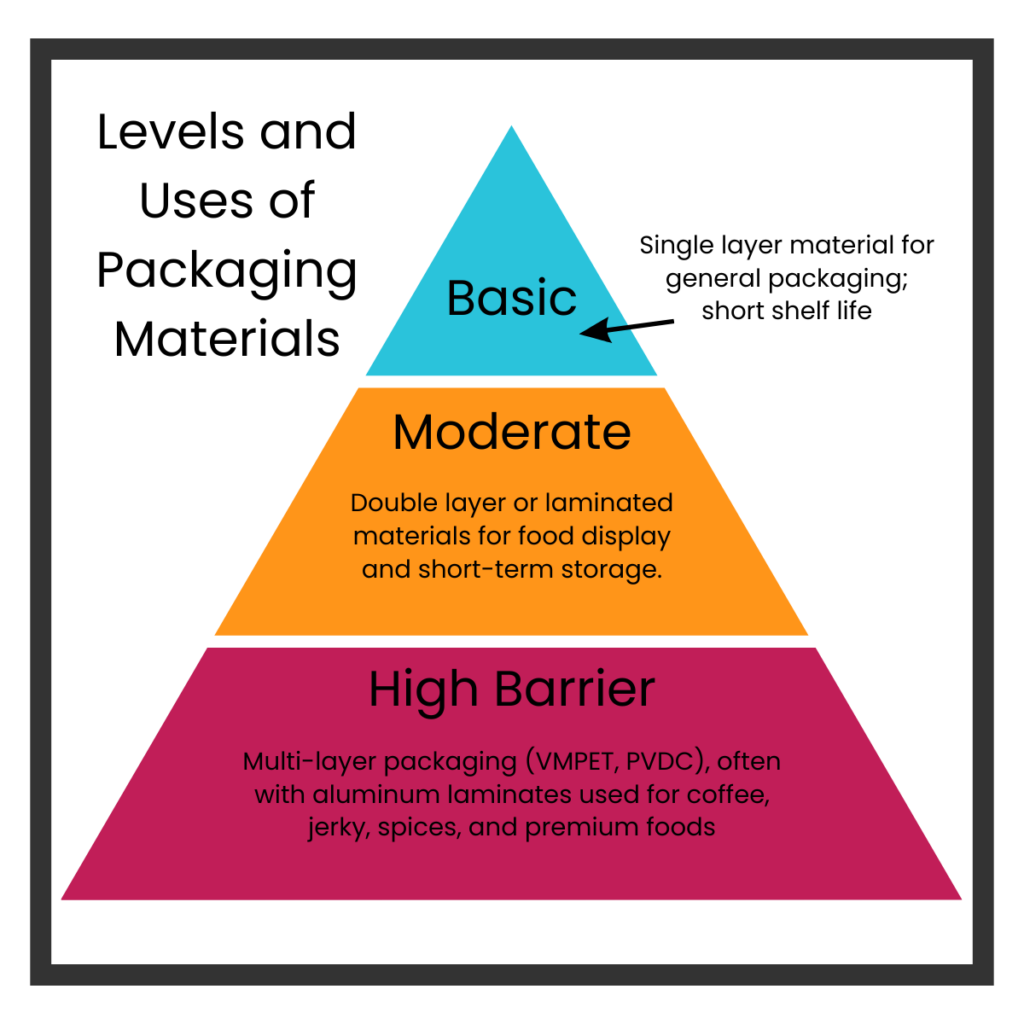
Basic Barrier (Single Layer)
Basic barriers with a single layer are food safe and perform well for general packaging.
- Materials: PE, PP, PLA
- Use: general packaging, short shelf life
PE and PP materials both provide a moisture barrier. The PE bags are clear, soft, and flexible and provide good heat sealing capabilities. The PP bags provide high clarity, high gloss, and excellent tensile strength yet are not as breathable as the PE bags. PLA is a polylactic acid that is derived from plants and provides a medium oxygen barrier and a low moisture barrier but is an eco-friendly packaging option.
Most plastic bags used for food, retail, transporting goods, and general packaging are basic barrier packaging. Bags made with biaxially oriented polypropylene (BOPP) offer exceptional clarity for food products.
Basic Barrier (Double Layer / Laminated)
Double layer or laminated packaging provides a basic barrier with two layers.
- Materials: PET/PE, PE/PP laminations
- Use: snacks, grains, cookies
Materials like PP and PE are combined to create a stronger moisture barrier. PET provides a gas and aroma barrier as well as a moisture barrier. When blended with polymers such as cast unoriented polypropylene (CPP) and BOPP, the PP bags have even better clarity and heat sealing performance.
Double barrier packaging is used in heavy duty gusset bags and heavy duty heat seal bags for grains, nuts, and heftier products like rice. Pouches with laminated inner lining are used for cookies, candy, pet treats, and more.
Moderate Barrier
A moderate level barrier protects against gases, moisture, aromas and sometimes UV light.
- Materials: PET, PVC
- Use: food display, short-term storage
PET is lightweight, food safe, and is commonly used for thermoformed packaging for plastic water bottles, meat and cheese packaging, and microwave packaging. PET offers high clarity and an excellent print surface, making it a popular material for displaying decorative food products.
Polyvinyl chloride or PVC is a more rigid plastic material and can break down from UV rays. This material is chemical resistant yet not as clear. Many soft vinyl products are made of this same material.
When a moderate level barrier is needed for food packaging, PET is usually the best option. PVC is a better choice for products like office supplies, electronics, and short-term food storage.
High Barrier Packaging
High performing barriers are composed of multilayers and protect against odors, freshness, moisture, gases, UV light, and visible light.
- Materials: VMPET, PVDC, Aluminum laminates, PET (when layered with another plastic)
- Use: coffee, jerky, spices, premium foods
On its own, PET is a strong plastic that offers an excellent oxygen barrier, durability, and heat resistance. When laminated onto certain plastics like PP or CPP, this blend of materials provides a strong UV and moisture barrier.
Polyvinylidene chloride (PVDC) is often used as a coating with other plastics (like PET). High gloss in appearance, PVDC offers excellent oxygen and moisture barrier properties, and is comparable to metallized films.
The highest barrier packaging is often a metallized laminate where the middle layer is VMPET or a thin layer of aluminum (Al) is placed on the surface of a plastic film. This lamination provides a high barrier to light and oxygen.
Plant-based PLA can be laminated with an ALOX (aluminum oxide) coating, allowing even sustainable packaging to have high barrier properties.
High barrier packaging is needed when packaging consumables, chemical agents, pharmaceuticals, or aromatic and flavorful food and dry goods. Products like jerky, seasoning packets, chocolate, coffee, bath salts, pet treats, and other products benefit from high barrier packaging.
Common Barrier Packaging Mistakes to Avoid
- Using low barrier packaging for oxygen-sensitive products
- Ignoring humidity and storage conditions
- Overpaying for high barrier packaging when not needed
- Skipping real-world testing before scaling
Barrier Packaging & Shelf Life: Packaging That Supports Performance
Barrier packaging isn’t one-size-fits-all. Shelf life depends on:
- Product composition
- Package size (smaller packages often need higher barriers)
- Environmental exposure
- Material performance
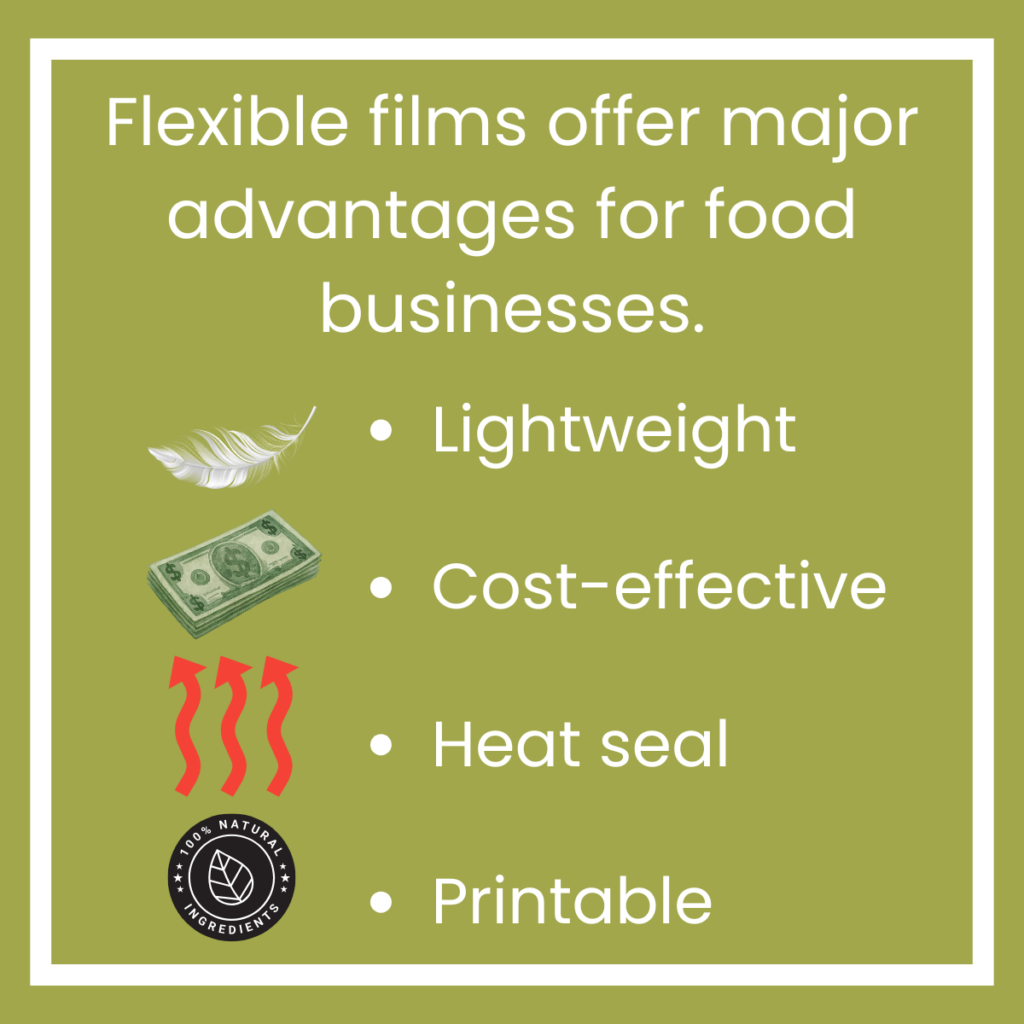
Flexible films offer major advantages for food businesses:
- Lightweight and cost-effective
- Customizable formats and sizes
- Heat sealable for added protection
- Printable for branding and compliance
The goal is to deliver the highest possible product quality from production to consumption. With the right barrier structure, packaging becomes a tool for quality control.
As food businesses continue to innovate, packaging will remain a key part of how products are protected, presented, and delivered. Choosing the right barrier today sets the foundation for consistent quality and long-term growth.
Best Barrier Packaging Options from ClearBags
ClearBags barrier packaging combines quality, versatility, and product visibility. Some of our favorites include:
- Basic Barrier Packaging: Gusset bags, Crystal Clear Bags
- Double Layer Basic Barrier: Heavy duty gusset bags, stand up rice pouches
- Medium Barrier: Clear boxes, Stand up pouches
- High Barrier: Metalized stand up pouches, child resistant bags, coffee bags
Options like flat heat seal bags, gusset bags, and high-clarity food-safe packaging protect freshness and extend shelf life while showcasing contents. With multiple sizes and materials (including eco-friendly options), these solutions adapt easily to a wide range of food products.
FAQs
What is barrier packaging for food?
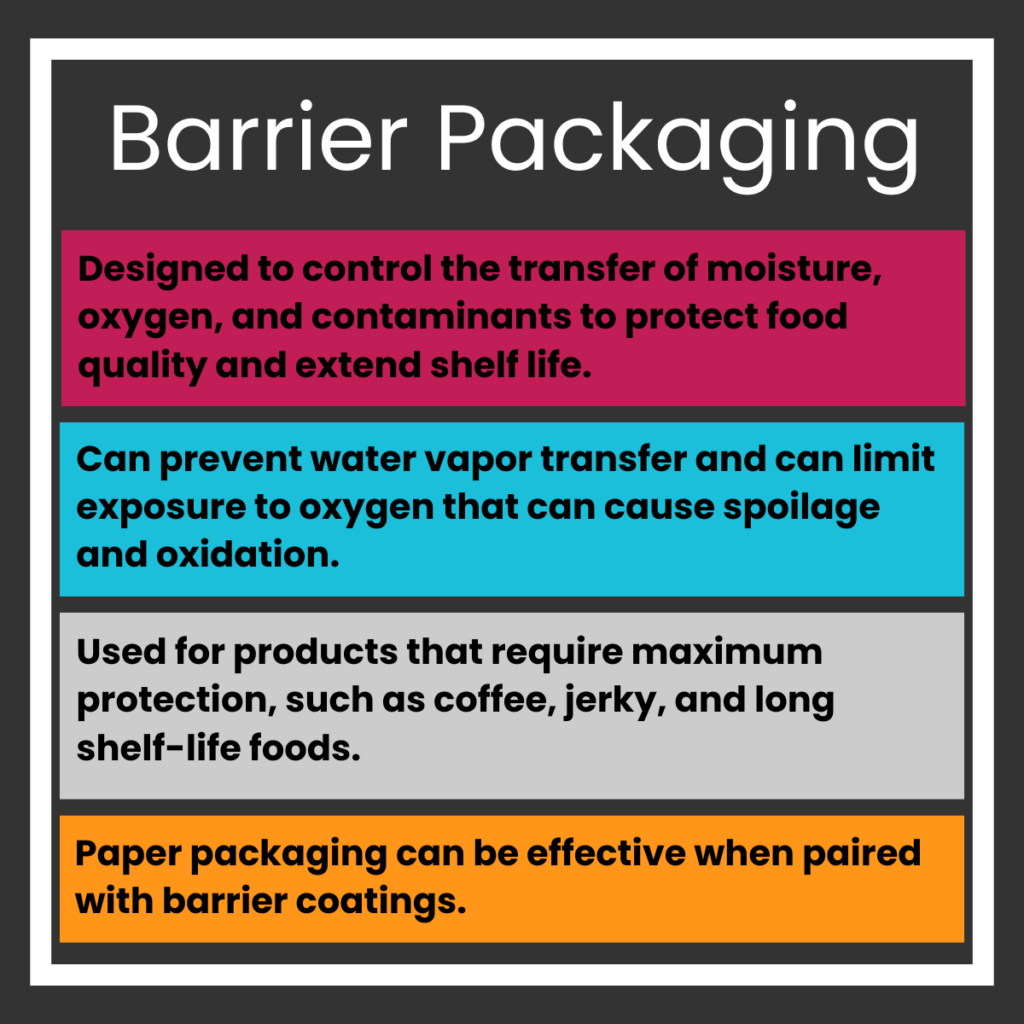
Barrier packaging is designed to control the transfer of moisture, oxygen, and contaminants to protect food quality and extend shelf life.
What is the difference between moisture and oxygen barrier packaging?
Moisture barrier packaging prevents water vapor transfer, while oxygen barrier packaging limits exposure to oxygen that can cause spoilage and oxidation.
What is high barrier packaging used for?
High barrier packaging is used for products that require maximum protection, such as coffee, jerky, and long shelf-life foods.
Is paper packaging a good barrier option?
Paper packaging can be effective when paired with barrier coatings, especially for products with a short shelf life or low-moisture applications.
