
Using Flexible Packaging for Product Refills: Benefits, Costs, and Best Practices
Why Brands Are Switching to Refill Pouches: Flexible Packaging Explained
Learn how flexible packaging for refills helps brands reduce costs, improve sustainability, and launch refill programs.
Why Refill Packaging Is Gaining Momentum
Refill programs are quickly becoming a practical strategy for growing brands, especially in Direct-to-Consumer (DTC) and specialty retail. From spice blends and bath salts to supplements and cleaning concentrates, more companies are adopting flexible packaging for refills to reduce costs and improve sustainability.
This shift reflects a broader move toward reuse systems, lower shipping impact, and better customer retention, all while keeping packaging approachable and scalable.
In this post, we’ll break down how flexible packaging works, why it’s effective, and how to implement it successfully.
What Is Flexible Packaging?
Flexible packaging refers to packaging made from lightweight, pliable materials that can conform to a product’s shape.
Common formats include:
- Stand-up pouches
- Flat bags
- Gusset bags
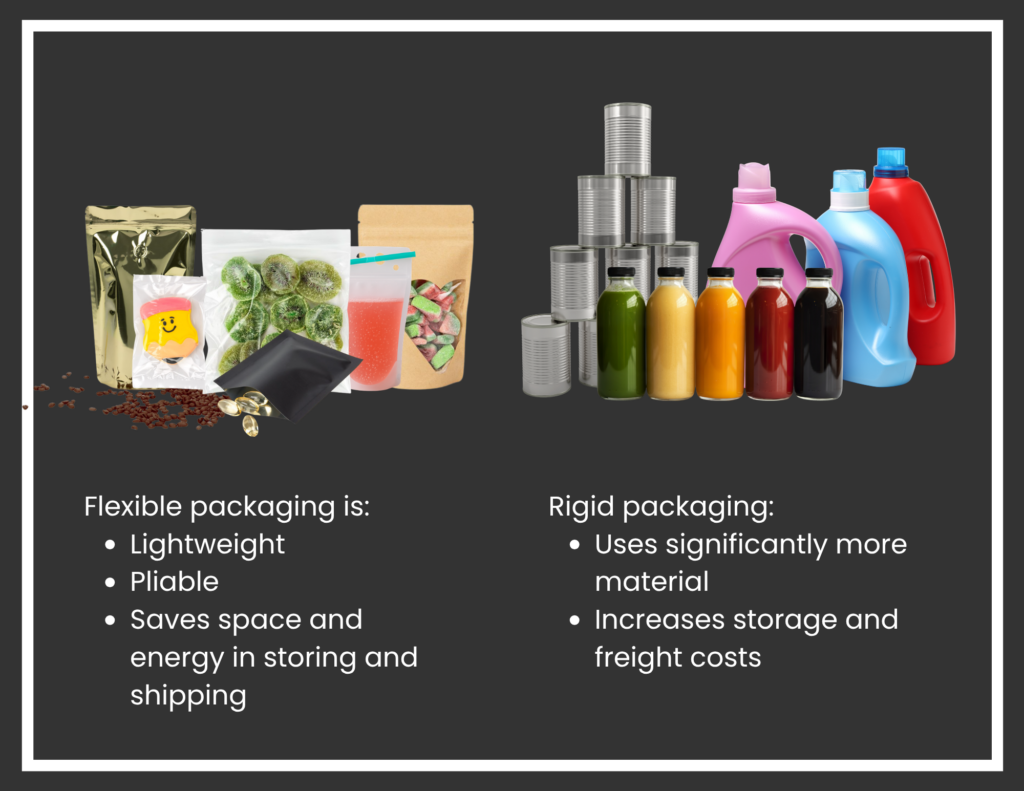
Unlike rigid packaging (glass jars, plastic bottles, tins), flexible packaging:
- Uses significantly less material
- Ships compactly or flat
- Reduces storage and freight costs
Why Flexible Packaging Works So Well for Refills
Refill systems eliminate the need to repurchase primary packaging like glass or rigid plastic containers.
Key cost advantages:
- Less material per unit
- Lower shipping costs due to reduced weight
- Ability to offer lower-priced refill options
For brands, this improves margins. For customers, it creates a clear incentive to come back.
Reduced Environmental Impact
Flexible packaging often gets dismissed because it isn’t always curbside recyclable, but that’s only part of the story.
In practice, it can significantly reduce environmental impact. Flexible packaging:
- Uses 70–80% less plastic than rigid bottles
- Is lightweight and thus lowers transportation emissions
- Ships flat or compact, reducing fuel usage
When paired with reusable containers, refill pouches support a hybrid sustainability model: durable primary packaging + low-impact replenishment.
Research also shows that reuse systems could reduce global plastic leakage by over 20% by 2040 when scaled effectively.
Convenience for Customers
Refill pouches align with familiar consumer behavior, which is similar to buying coffee refills or cleaning products.
Benefits include:
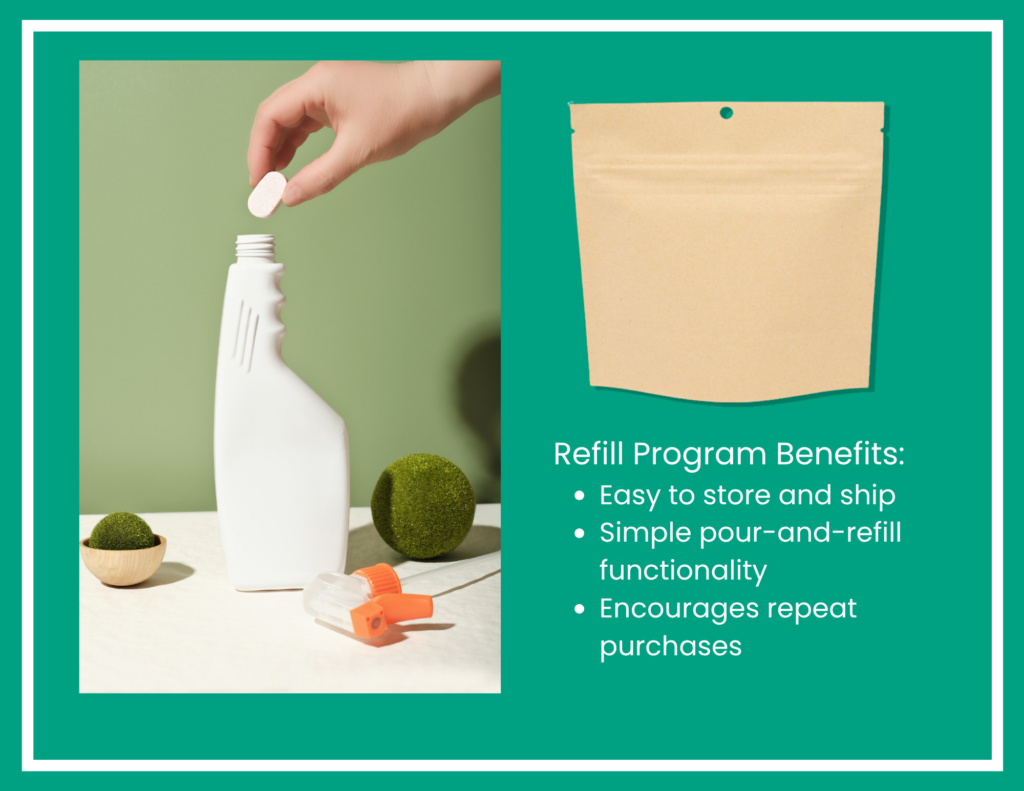
- Easy to store and ship
- Simple pour-and-refill functionality
- Encourages repeat purchases
Convenience is often the deciding factor in whether a refill program succeeds.
Common Products That Work Well With Refill Pouches
Flexible refill packaging performs best with dry, pourable, or concentrated products:
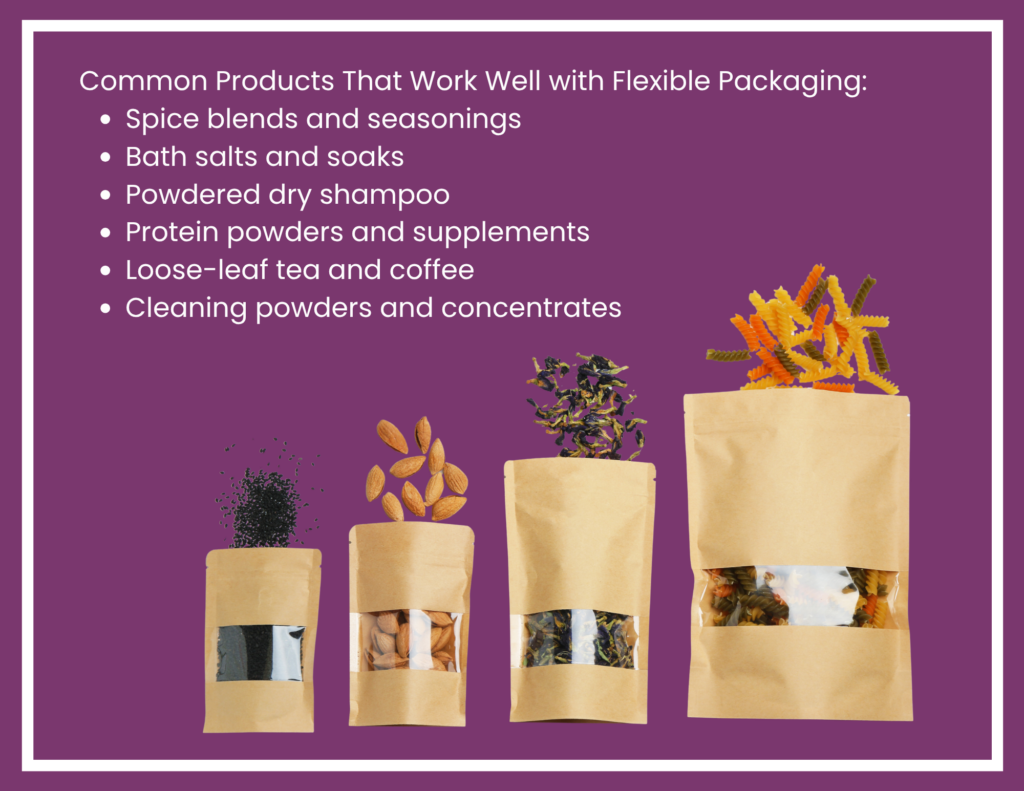
- Spice blends and seasonings
- Bath salts and soaks
- Powdered dry shampoo
- Protein powders and supplements
- Loose-leaf tea and coffee
- Cleaning powders and concentrates
This versatility makes flexible packaging one of the easiest entry points for brands exploring refill models.
Stand-Up Pouches vs Other Refill Packaging Options
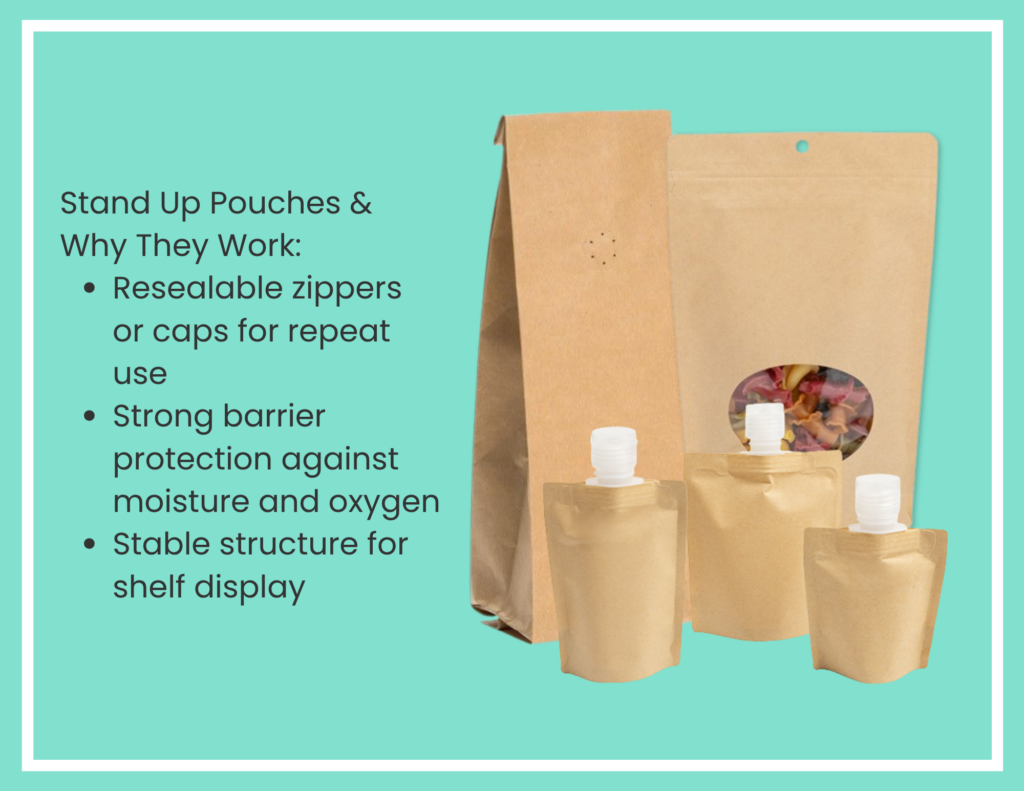
Stand-up pouches are the most widely used format for refill packaging.
Why they work:
- Resealable zippers for repeat use
- Tear notches for easy opening
- Strong barrier protection against moisture and oxygen
- Stable structure for shelf display
Sustainability Considerations for Refill Packaging
Are Flexible Pouches Recyclable?
Not always, and it’s important to be transparent.
Many traditional pouches use multi-layer materials that are difficult to recycle. However:
- Mono-material pouches (e.g., all polypropylene) are improving recyclability
- Others can be recycled through store drop-off programs
Avoid overpromising. Instead, focus on total system impact.
Why “Less Material” Still Matters
Sustainability should consider more than just recyclability; it should also consider the overall resource use.
Flexible packaging:
- Reduces raw material consumption
- Lowers transportation emissions
- Supports reuse systems
Paper is generally the go-to for reducing materials, but it’s also worth noting: paper packaging often requires liners for moisture or oxygen protection, which can make it non-recyclable as well. The more effective approach is life-cycle thinking, not single-attribute comparisons.
How Brands Can Launch a Refill Program Using Flexible Packaging
A successful refill system doesn’t need to be complex. In fact, simplicity drives adoption.
Step 1: Start with a durable primary container
Glass or metal packaging builds perceived value and supports reuse.
Step 2: Design efficient refill packaging
Use lightweight pouches that minimize cost and shipping weight.
Step 3: Educate customers
Make refill instructions clear and visible.
Step 4: Price strategically
Offer meaningful savings compared to the original product.
Step 5: Test and refine
Gather feedback and optimize packaging formats or sizes.
Is Flexible Packaging Right for Your Refill Strategy?
Flexible packaging for refills works best when:
- Products are dry, pourable, or concentrated
- Customers are willing to reuse containers
- Shipping efficiency is a priority
It may not be ideal for:
- Fragile products
- Items requiring rigid protection
Shipping water is expensive and inefficient. Concentrates allow customers to add water at home, reducing both packaging waste and transportation emissions.
This hybrid model maintains a premium experience while significantly lowering costs and environmental impact. As with any packaging decision, testing is key.
The Future of Refill Packaging
Refill systems are not a perfect solution, but they are a practical one.
They reduce material use, improve shipping efficiency, and create stronger customer relationships through repeat purchases. Most importantly, they offer a scalable way for brands to move toward more sustainable packaging without overhauling their entire operation.
If you’re exploring refill packaging options, flexible packaging is often the simplest place to start.
