
Farmers Market Packaging Ideas: How to Package Produce, Baked Goods, and More
Last Updated on August 6, 2026 by Kira Andrus
Farmers market season is all about fresh harvests, handmade products, and supporting the local businesses that make communities thrive. Whether you’re selling fresh produce, artisan bread, baked goods, coffee, or specialty foods, the right farmers market packaging helps protect your products, improve presentation, and create a memorable customer experience.
The best packaging balances freshness, visibility, convenience, and branding while helping your products stand out in a crowded marketplace. Here are practical farmers market packaging ideas for produce, baked goods, and more.
Why Packaging Matters at Farmers Markets
Packaging is often the first thing customers notice. Before they taste your product, they evaluate how fresh, professional, and trustworthy it appears.
Effective farmers market packaging helps:
- Protect products during transport and handling
- Preserve freshness and quality
- Improve product visibility
- Make products easier to carry
- Reinforce your brand and professionalism
Thoughtful packaging can increase perceived value and encourage impulse purchases, helping vendors maximize sales throughout the market season.
Fruit Packaging Ideas for Farmers Market Vendors
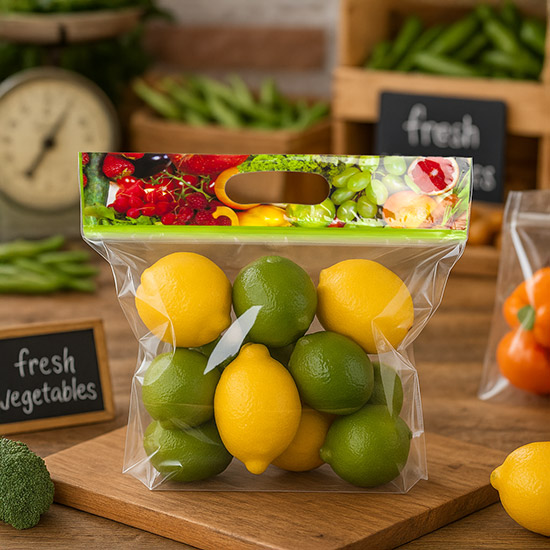
Fresh fruit requires packaging that protects delicate products while allowing customers to see what they’re buying.
Packaging for Berries and Delicate Fruit
Berries, cherries, and other fragile fruits benefit from clear containers or food-safe bags that showcase freshness while minimizing handling. Clear packaging allows customers to inspect quality without opening the package.
For premium presentation, consider stand-up pouches or crystal-clear bags with a flat bottom that display fruit attractively while remaining easy to transport.
Packaging for Apples, Peaches, and Citrus
Heavier fruits often work well in gusseted poly bags, which provide strength and flexibility. For a more rustic presentation, kraft paper bags create a farm-fresh appearance while offering convenient portability.
Specialty Fruit Products
Value-added products like dried fruit can be packaged in pillow boxes or stand-up pouches for a premium look. Seasonal items such as simmer pot blends can be packaged in heat-sealed pouches that showcase ingredients while maintaining freshness.
Packaging Tip: Always use food-grade packaging materials and keep produce cool before packaging to reduce condensation buildup.
Vegetable Packaging Solutions for Fresh Produce
Vegetable packaging should preserve freshness while making products easy for shoppers to browse and purchase.
Packaging Leafy Greens
Leafy greens, salad mixes, and microgreens are often packaged in clear bags that allow customers to easily view product quality. Consider adding a packaging date to labels so consumers know when products were harvested or packed.
Heat-sealable flat-bottom gusset bags provide excellent visibility and durability while helping products stand upright for attractive displays.
Packaging Root Vegetables
Potatoes, onions, carrots, and similar vegetables can be grouped in gusseted bags that provide enough room for bulk quantities while keeping displays organized.
Packaging Herbs and Smaller Produce
Fresh herbs and smaller produce items benefit from resealable packaging that helps maintain freshness after purchase. Clear bags also make it easier for customers to identify products quickly while shopping.
Packaging Tip: For vendors looking for a simple closure solution, bag sealers can provide a professional appearance while creating a tamper-evident package.
Bread Packaging for Farmers Markets
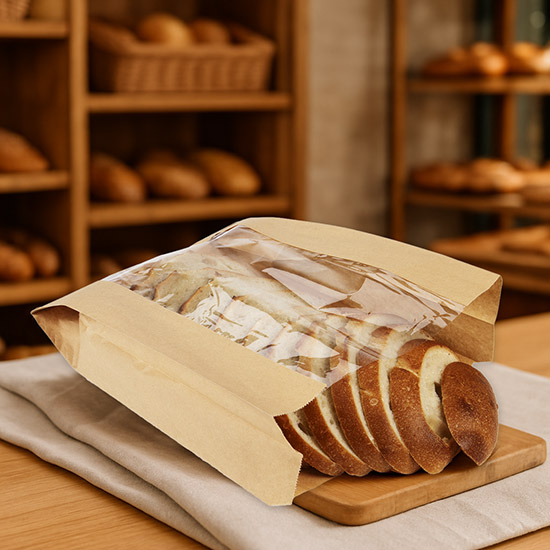
Fresh bread remains one of the most popular farmers market products, but different types of bread require different packaging approaches.
Packaging Artisan Bread Loaves
Crusty breads such as sourdough, baguettes, and rustic loaves benefit from packaging that allows airflow. Micro-perforated bread bags help release excess moisture while protecting the loaf, helping maintain a crisp crust.
Kraft bread bags with windows are another popular option because they combine artisan appeal with product visibility.
Packaging Soft Bread and Rolls
Soft sandwich bread, brioche, and dinner rolls require moisture retention to stay fresh. Poly bread bags and side-gusset bags help protect these products from drying out while maintaining their soft texture.
Maintaining Freshness and Presentation
Allow bread to cool completely before packaging. Trapped heat can create condensation, leading to soggy crusts and reduced shelf life.
Packaging Tip: Simple additions like branded labels, stickers, or custom tags can transform basic bread packaging into a more professional retail presentation.
Packaging for Baked Goods
Cookies, brownies, muffins, cupcakes, and pastries all require packaging that balances freshness with presentation.
Cookies and Brownies
Clear food-safe bags remain one of the most effective packaging options because customers can immediately see the product. Gusseted bags help cookies stand upright, creating a fuller and more professional display.
Heat-sealed packaging can further improve freshness and create a polished retail appearance.
Muffins and Cupcakes
Cupcakes and muffins require packaging that protects delicate toppings and decorations. Individual containers or bakery boxes with inserts help prevent damage during transport.
Packaging Tip: Window boxes are especially effective for baked goods because they showcase products while maintaining structural protection.
Food Packaging Best Practices for Farmers Markets
Regardless of what you’re selling, following a few packaging best practices can help improve product quality and customer satisfaction.
Choose Food-Safe Materials
Always use packaging designed for direct food contact. Food-safe materials help protect product quality and support compliance with applicable food regulations.
Include Distinct Labels
Labels should provide important product information and may include:
- Product name
- Ingredients
- Allergen information
- Net weight
- Business information
- Packaging or harvest date
Proper labeling helps build trust and supports regulatory compliance.
Create Attractive Displays
Packaging should work as part of your display strategy. Clear packaging, stand-up bags, and window boxes help customers quickly identify products and encourage browsing.
Packaging Tip: Consistency across packaging styles also creates a more professional booth appearance.
Eco-Friendly Packaging for Farmers Markets
Many farmers market shoppers actively seek environmentally responsible businesses. Sustainable packaging can help support those expectations while reinforcing your brand values.
Popular eco-friendly options include:
- Compostable stand-up pouches
- Recyclable clear bags
- Kraft paper bags and bakery packaging
- Plant-based packaging materials
- Minimalist packaging designs that reduce waste
These options work well for produce, baked goods, coffee, tea, dried foods, handmade products, and artisan goods.
Don’t Forget the Carry-Out Bag
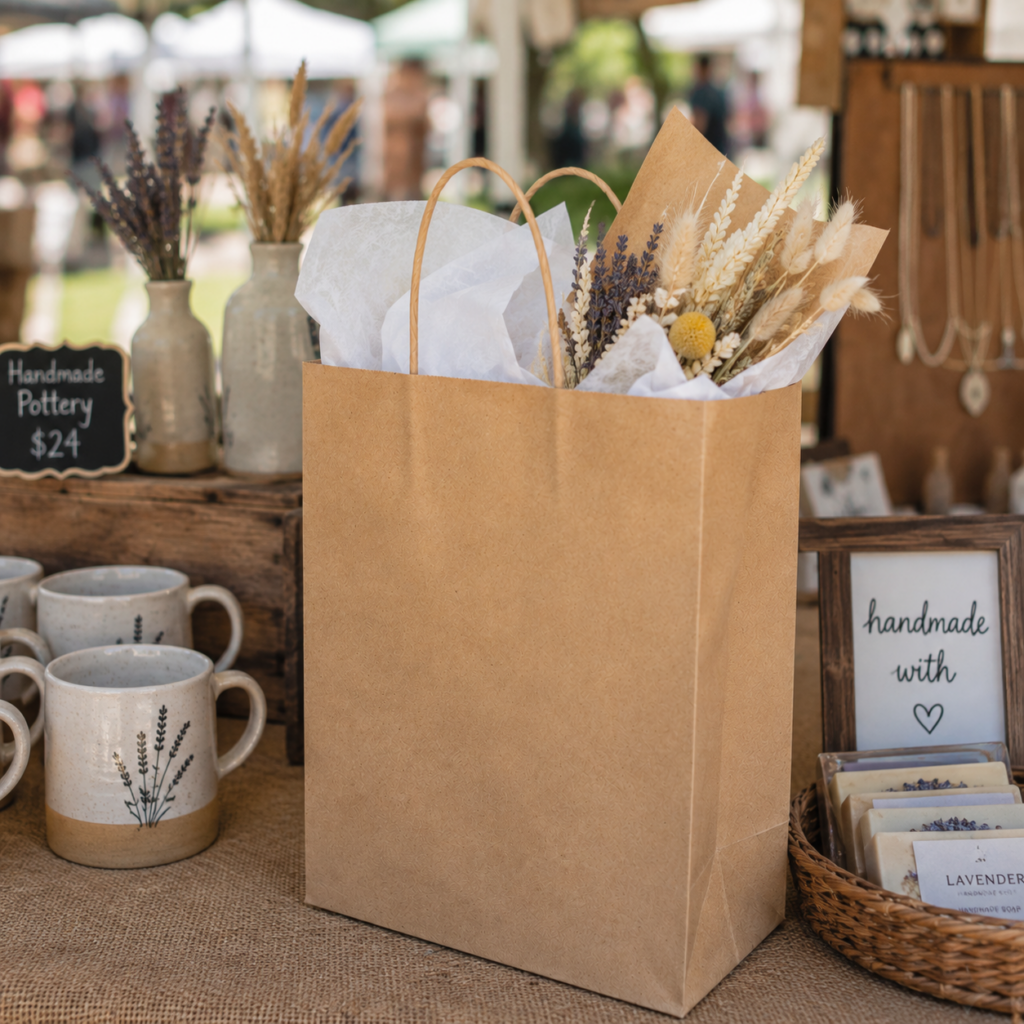
Once customers have selected their products, carrying everything safely becomes important.
Kraft paper merchandise bags create a natural, farm-market aesthetic and can easily be customized with stamps, stickers, or labels. For high-volume operations, recycled-content plastic merchandise bags offer a practical and economical solution.
A well-chosen carry-out bag improves convenience, protects purchases, and extends your brand beyond the market booth.
How to Choose the Right Farmers Market Packaging
When selecting packaging, consider:
- Product size and weight
- Freshness requirements
- Transportation needs
- Product visibility
- Sustainability goals
- Branding opportunities
The best farmers market packaging reflects the quality of the product inside while protecting it from harvest to customer purchase.
The Bottom Line
Successful farmers market packaging does more than contain a product. It protects freshness, improves presentation, supports branding, and enhances the customer experience.
Whether you’re packaging fresh produce, artisan bread, baked goods, specialty foods, or handmade goods, choosing the right packaging helps your products stand out while reflecting the care and craftsmanship behind them. By balancing protection, visibility, and presentation, vendors can create packaging that supports both product quality and stronger sales throughout the market season.
Frequently Asked Questions
What is the best packaging for farmers markets?
The best farmers market packaging depends on the type of product you’re selling, but it should always balance product protection, freshness, presentation, and convenience. Clear bags, stand-up pouches, bakery boxes, bread bags, and produce bags are all popular choices because they help products look professional while protecting them during transport and display. Food-safe materials and clear labeling are also important considerations for farmers market vendors.
What packaging works best for fresh produce?
The best packaging for fresh produce depends on the product. Leafy greens and herbs need breathable packaging to allow excess moisture and heat to escape, helping prevent wilting, sliminess, and mold growth. Root vegetables like potatoes, onions, and carrots require sturdy, higher-mil bags that can handle their weight without tearing. Delicate fruits such as berries benefit from clear containers or protective bags that reduce handling. Look for packaging that provides visibility, durability, and appropriate airflow or moisture control to help maintain product quality.
How should bread be packaged for a farmers market?
Bread packaging should match the type of bread being sold. Crusty artisan loaves, such as sourdough and baguettes, are best packaged in micro-perforated bread bags or kraft bread bags with windows that allow some airflow while protecting the loaf. Soft breads and rolls typically stay fresher in poly bread bags that help retain moisture. Regardless of the packaging type, bread should always be cooled completely before packaging to prevent condensation and maintain freshness.
What packaging is best for baked goods?
The best packaging for baked goods depends on the product’s size, shape, and fragility. Cookies and brownies are commonly packaged in clear bags, gusseted bags, or window boxes, while cupcakes and muffins often require bakery boxes or containers with inserts to protect decorations and toppings. For giftable products or seasonal assortments, decorative bakery boxes and window packaging can enhance presentation while keeping products fresh.
Are clear bags good for farmers market displays?
Yes, clear bags are one of the most effective packaging options for farmers market displays because they allow customers to see the product before purchasing. Visibility helps communicate freshness, quality, and value while encouraging impulse purchases. Clear bags work especially well for produce, baked goods, snacks, dried foods, and specialty products. Pairing clear packaging with professional labels and branding can create an attractive display that helps products stand out at the market.
