
What Makes Great Chocolate Packaging? A Practical Guide for Chocolatiers
Last Updated on October 30, 2026 by Megan Curtis
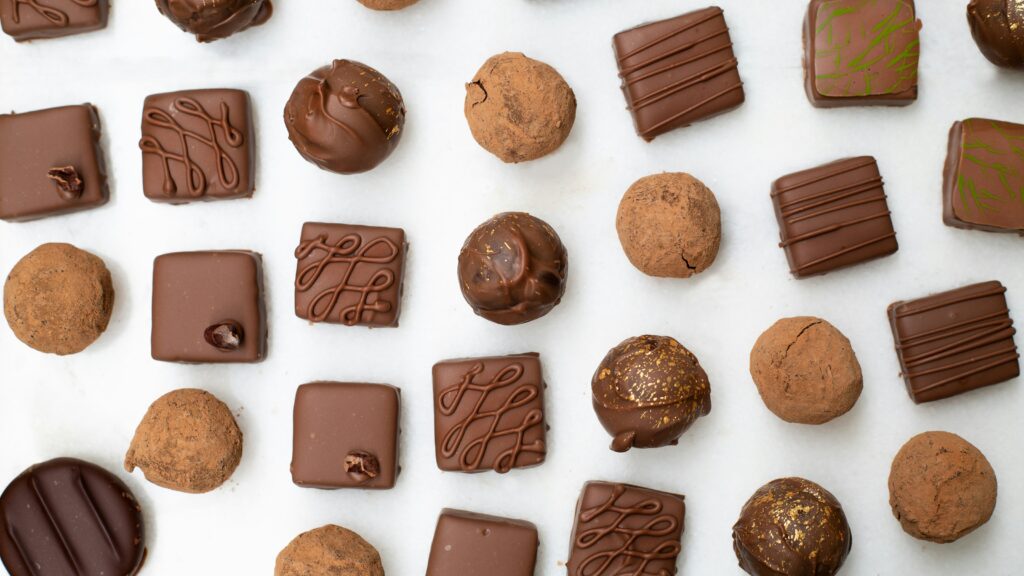
Artisan chocolate is all about detail. From delicate truffles to bold, infused bars, chocolatiers invest time perfecting every element of their product. Packaging should do the same.
Chocolate packaging should preserve flavor, extend shelf life, and create a memorable brand experience. Whether you sell in retail, online, or at markets, your packaging plays a direct role in how customers perceive quality.
This guide breaks down practical chocolate packaging solutions that balance protection, presentation, and brand impact.
Why Packaging Matters for Chocolate
Chocolate is sensitive to its environment. Without proper packaging, it can quickly lose quality due to:
- Heat and temperature changes → melting or bloom
- Oxygen exposure → flavor degradation
- Moisture → texture changes and sugar bloom
- Light → color fading and flavor impact
Well-designed packaging acts as a barrier against these elements while maintaining the visual appeal that drives purchase decisions. At the same time, packaging is often your first brand interaction, especially in retail settings where customers are comparing products side by side.
Choosing the Right Materials for Chocolate Packaging
Material selection is the foundation of effective packaging. The goal is to balance protection with presentation.
High-Barrier Materials (Best for Shelf Life)
- Aluminum foil: Excellent protection against light, oxygen, and moisture—ideal for wrapping bars or lining boxes
- Laminated films: Multi-layer structures that provide extended shelf life for premium products
Clear Rigid and Film Options (Best for Presentation)
- PET (Polyethylene terephthalate): Strong clarity with good barrier properties; great for showcasing decorated chocolates
- PP (Polypropylene): Lightweight and transparent; ideal for simple confections like bark or candies
Flexible Materials (Best for Shipping Protection)
- PE (Polyethylene): Strong moisture barrier; commonly used for liners or inner bags
Many chocolatiers combine materials. For example, they use foil or film for protection and an outer box for branding.
Chocolate Packaging Formats to Consider
Different formats serve different product types, price points, and customer experiences.
1. Box Sets for Assortments
Boxed assortments remain a go-to for artisan chocolate. They:
- Protect delicate pieces
- Organize multiple flavors
- Create a premium, giftable presentation
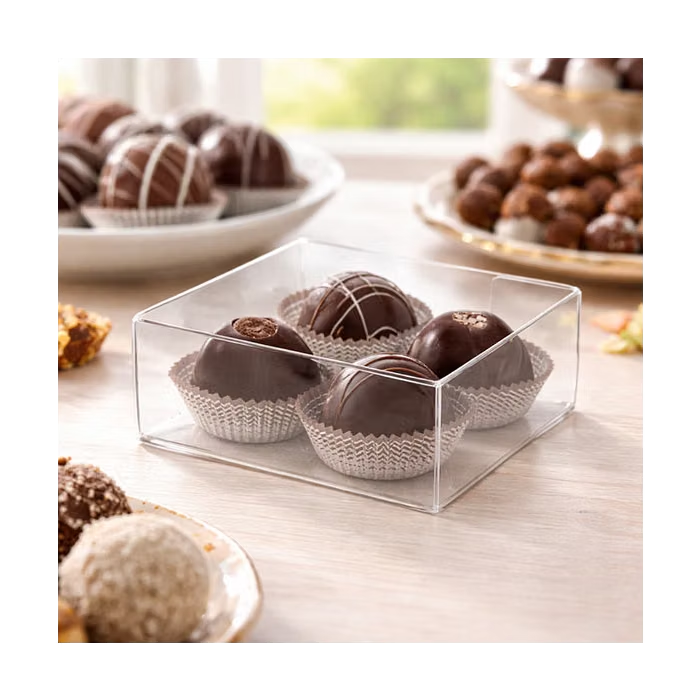
Best for: truffles, bonbons, seasonal collections
To elevate your brand, use inserts or trays to keep chocolates in place. You can also pair clear lids with branded labels for visibility. Choose Kraft for a natural look or bold colors for seasonal appeal
2. Two-Piece Rigid Boxes (Premium Feel)
For larger or decorated pieces, structured boxes offer both protection and presentation. Two-piece boxes (base + lid) are a classic choice for high-end chocolates.
- Communicate luxury and quality
- Allow for color customization
- Work well for gifting occasions
Best for: holidays, corporate gifts, higher price points
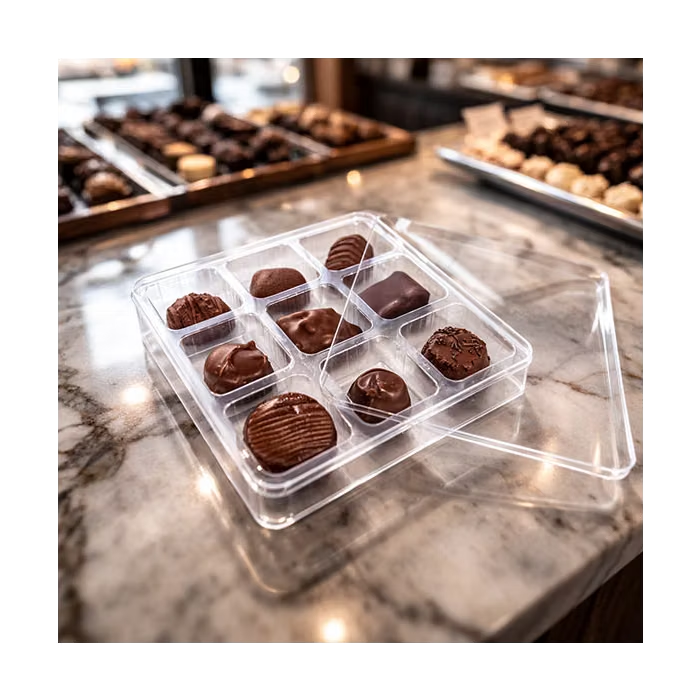
Dark tones (black, navy) suggest sophistication, while metallics (gold, bronze) signal indulgence. Two-piece box sets offer a variety of branding opportunities including adding slip covers, stretch loops, ribbons, or minimal labels for a clean, upscale finish without custom printing costs.
3. Single-Serve Packaging
Beyond convenience, single pieces act as powerful brand ambassadors. They give customers a firsthand look at quality, craftsmanship, and presentation, often sparking ideas for larger purchases. Individual packaging is ideal for:
- Sampling and introducing new flavors or collections
- Point-of-sale purchases and impulse buys
- Upselling premium or seasonal items
- Encouraging repeat visits through low-commitment purchases
- Inspiring larger custom orders for events or corporate gifting
Best for: truffles, chocolate-covered items (strawberries, nuts), specialty pieces
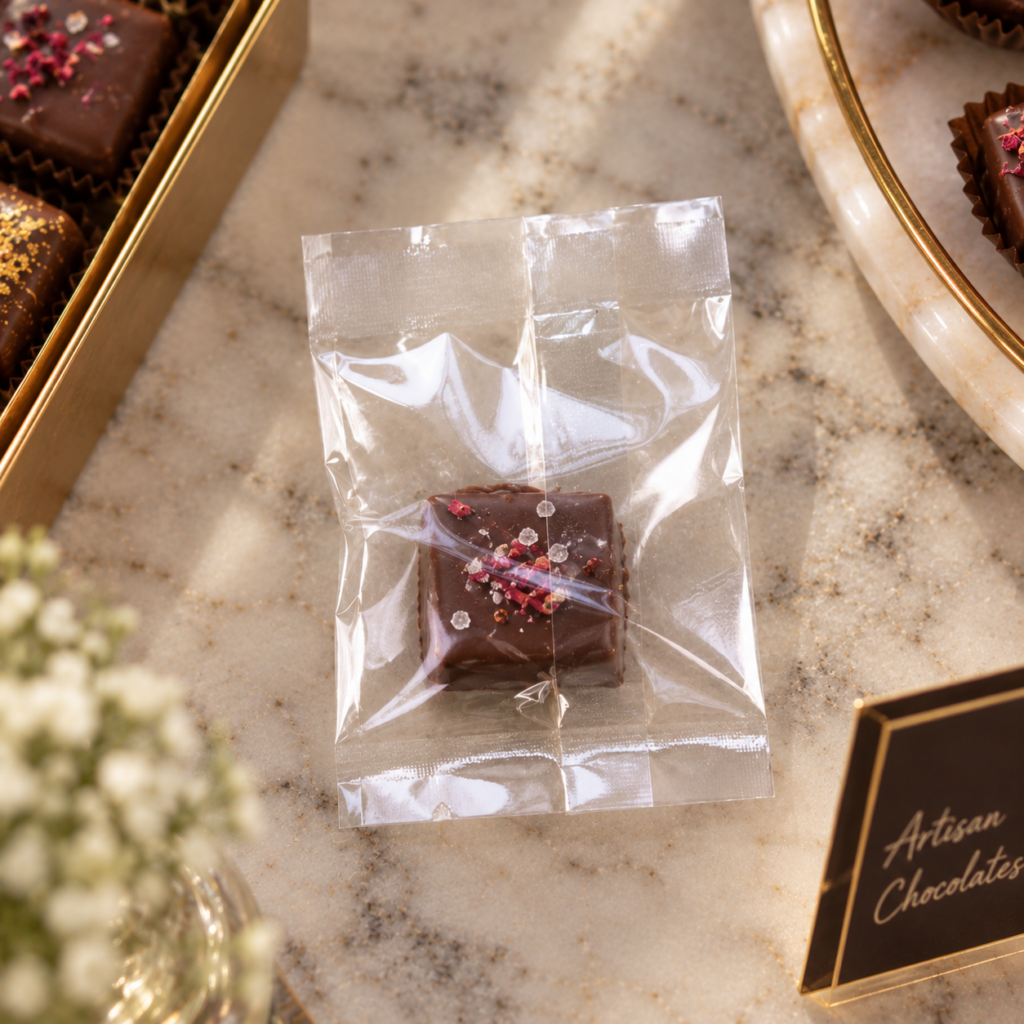
Single-serve chocolates offer an easy entry point for customers in a retail space. A single, beautifully packaged piece feels like a justified treat: quick, affordable, and satisfying. It also mirrors how customers actually shop today – on the go, looking for something portable and portion-controlled. For those mindful of indulgence, single-serve options make it easy to enjoy chocolate without overdoing it.
4. Flexible Packaging (Pouches & Bags)
Flexible packaging is increasingly popular for modern chocolate brands. It is light weight, durable, and customizable for premium branding. Additionally, flexible packaging is cost-efficient for storage, production, and transportation.
- Lightweight and cost-effective
- Easy to store and ship
- Can include resealable closures
Best for: chocolate bark, clusters, snackable pieces
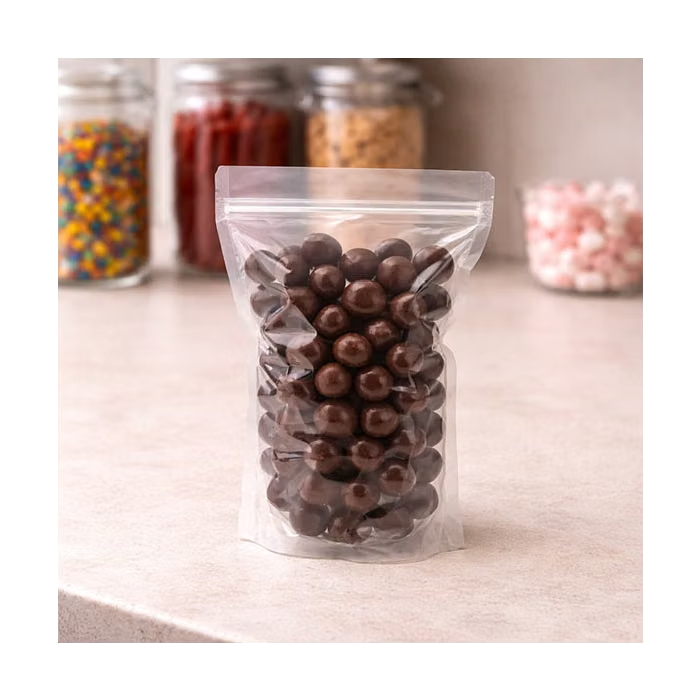
Features like zip closures or heat seals helps maintain freshness after opening. Additionally, many flexible packaging materials are recyclable, compostable, or designed to reduce overall material consumption.
5. Unique Shapes for Brand Impact
If your goal is shelf differentiation, structure matters. Unique designs stand out on store shelves, ensuring products are immediately noticeable, especially during busy shopping seasons like the holidays.
- Pyramid boxes create visual intrigue
- Drawer boxes offer a premium unboxing experience
These formats are especially effective for gifting and limited-edition collections. Unique packaging makes products feel like treasures rather than mass-produced items, helping justify a higher price point. Textural details can further elevate perception, signaling indulgence and even influencing how rich or flavorful customers expect the chocolate to be.
Branding Your Chocolate Packaging
Packaging is one of the most cost-effective ways to stand out in crowded retail environments. Simple, effective branding options include:
- Custom labels: Affordable and flexible for small batches
- Consider clear packaging + bold label. It lets the product shine while reinforcing brand identity
- Color consistency: Helps customers recognize your products instantly
- Clean design that avoids overcrowding
- Use typography and color to signal product type (dark, milk, seasonal, etc.)
- Highlight key differentiators (organic, single-origin, handmade)
Even without full custom printing, thoughtful design choices can create a polished, professional look.
Labeling and Compliance Basics
Chocolate packaging must also meet regulatory requirements. At a minimum, include:
- Product name (e.g., “Dark Chocolate Truffles”)
- Ingredient list (in descending weight order)
- Net weight
- Business name and address
- Additional Considerations
- Allergen statements (e.g., milk, nuts, soy)
- Nutritional information (when required)
- Cottage food laws (for small or home-based businesses)
Clear, accurate labeling builds trust and ensures compliance.
Common Chocolate Packaging Mistakes
Avoid these common issues:
- Using low-barrier packaging for long shelf-life products
- Ignoring temperature and humidity during storage and shipping
- Overcomplicating design at the expense of clarity
- Skipping testing before scaling production
Testing your packaging in real-world conditions is one of the most valuable steps you can take.
Packaging as a Competitive Advantage
Chocolate packaging is part of the product experience, and the right solution should help you:
- Preserve flavor and texture
- Extend shelf life
- Stand out visually
- Deliver a consistent, high-quality brand experience
As the chocolate market continues to grow, thoughtful packaging choices can set your products apart. The most effective strategies balance protection, presentation, and practicality, which ensures your product looks as good as it tastes from shelf to unboxing. Whether you’re selling single-serve treats or curated assortments, packaging becomes a silent salesperson that communicates quality and intent. When done well, it not only attracts attention but also builds trust, encourages repeat purchases, and reinforces your brand at every touchpoint.
