
How Kits Drive Customer Engagement (and Repeat Business)
Last Updated on August 13, 2026 by Kira Andrus
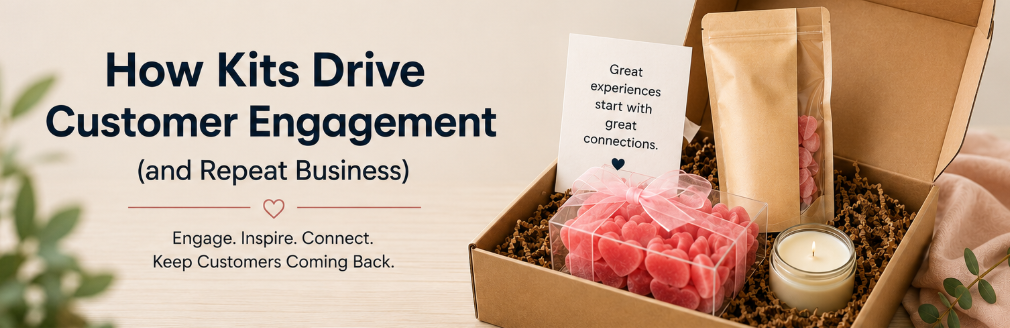
Some of the most effective customer experiences aren’t passive; they’re participatory. That’s where kits come in. A well-designed kit transforms your product from something customers simply purchase into something they actively engage with. Whether used for sampling, hands-on activities, or shared experiences, kits create interaction, build brand recall, and give customers a reason to come back.
What defines a kit?
A kit is a curated collection of complementary items assembled with a clear purpose – typically to complete a task, create something, or enable an experience. Unlike gift sets, which focus on presentation and immediate enjoyment, kits are designed for participation and utility.
Below are three proven kit strategies businesses can use to increase engagement and extend product value.
1. Sample Kits: Turn First Impressions into Lasting Ones
Sample kits remain one of the most effective tools for product introduction and brand recall, especially in B2B environments like trade shows, retail activations, and onboarding programs.
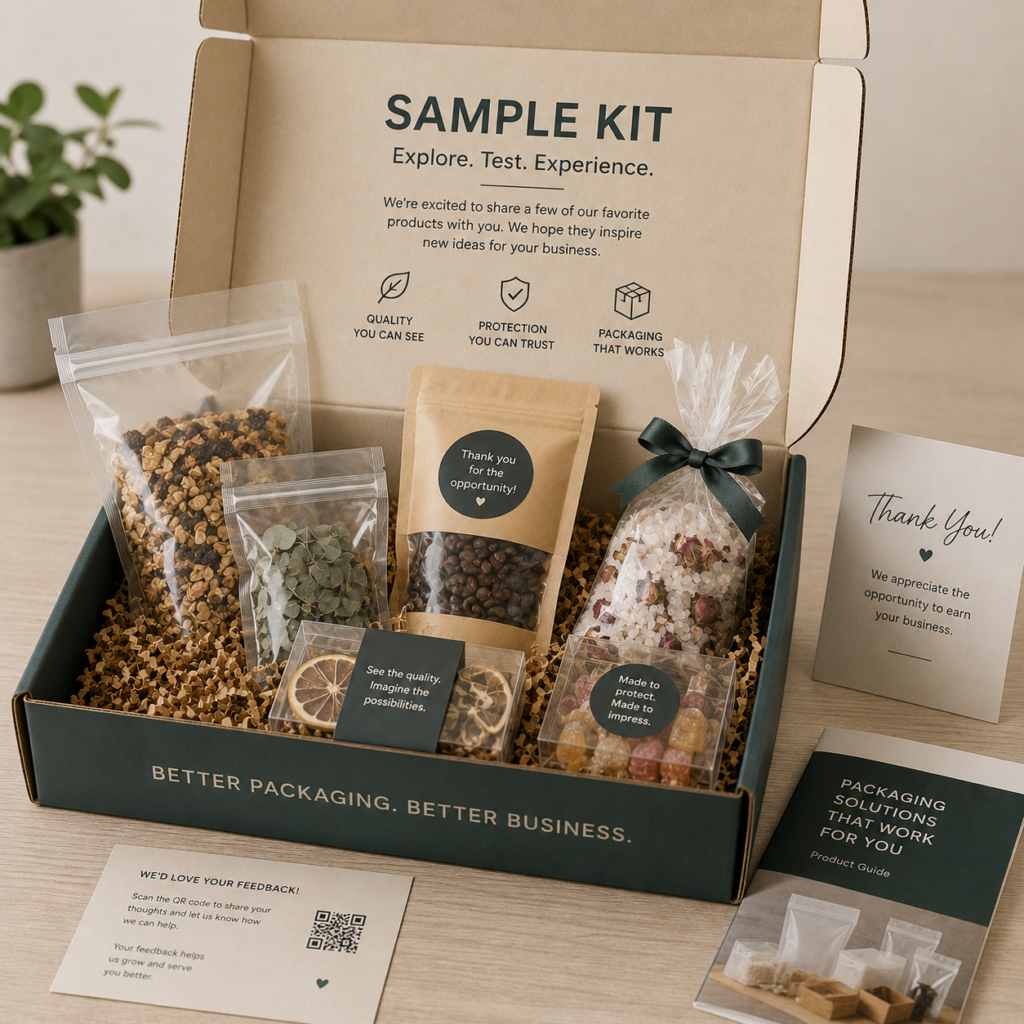
A well-structured sample kit helps:
- Introduce a broader product line in one touchpoint
- Encourage trial across multiple SKUs
- Keep your brand top-of-mind after the initial interaction
For example, at ClearBags, we assemble a sample kit that includes a mix of bags, boxes, and specialty materials tailored to a specific industry audience. This approach not only demonstrates product variety but also helps customers visualize real-world applications.
Best practices:
- Customize kits by audience or industry
- Include a clear call-to-action (promo, reorder info, QR code)
- Balance variety with cohesion as too many items can dilute impact
Opportunity:
Turn sample kits into modular programs allowing sales teams or distributors to assemble kits based on customer needs.
2. Activity Kits: Create Hands-On Brand Experiences
Activity kits shift your product from something customers buy to something they do. These kits are particularly effective for education, events, and experiential marketing.
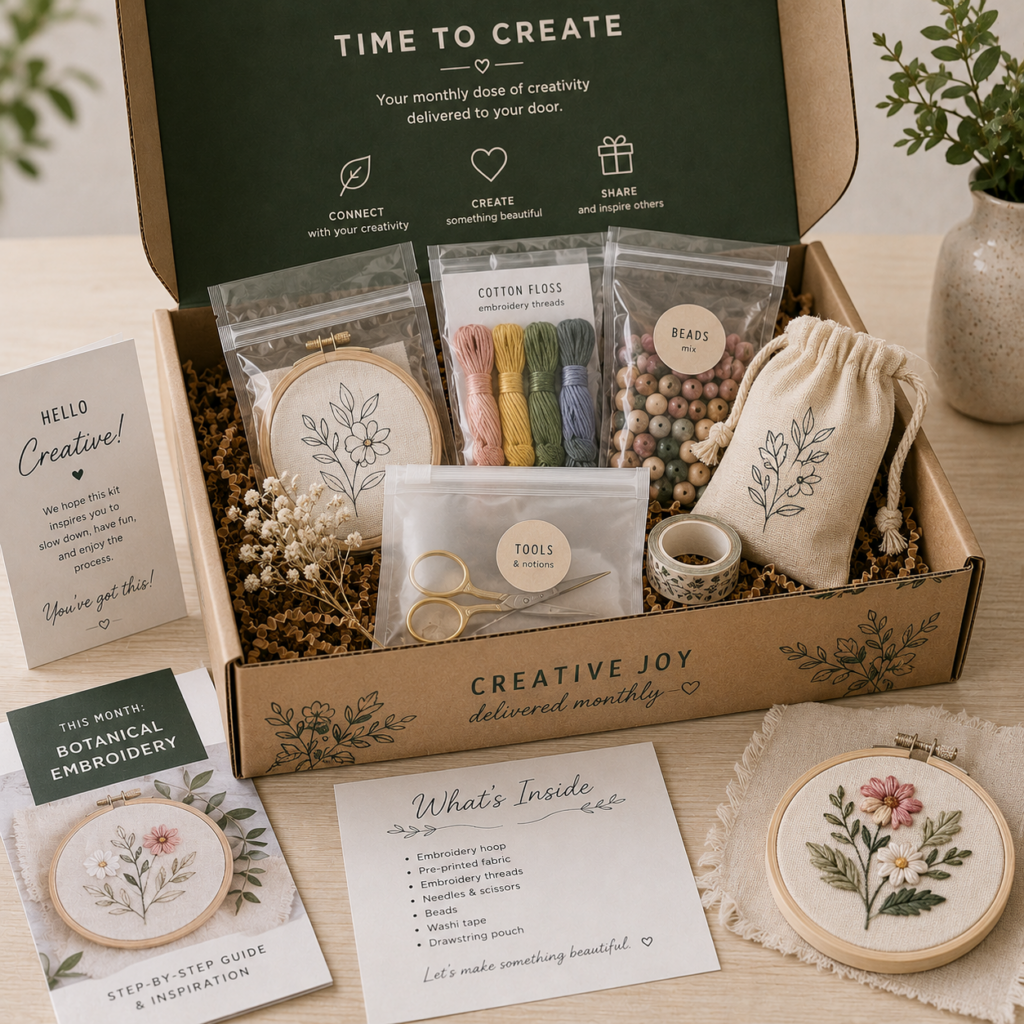
They can:
- Teach a skill or demonstrate product use
- Encourage creativity and personalization
- Create memorable, shareable experiences
Retailers and brands have long used this model. In-store workshops, “make-and-take” events, and DIY projects all rely on pre-assembled kits that guide customers through an activity.
Examples across industries:
- Craft & DIY: Seasonal craft kits, knitting kits, or kids’ party favor kits
- Stationery: Card-making kits with envelopes, pens, and embellishments
- Food: S’mores kits, waffle kits with toppings, or candy assembly kits
- Toys: Sensory kits, build-your-own sets, or themed play kits
Best practices:
- Keep instructions simple and visual
- Package components in a way that supports step-by-step use
- Design for portability! Customers should be able to take the experience anywhere
Opportunity:
Offer “kit-ready packaging bundles” so your customers can easily create and share their own kits for parties and events.
3. Social Kits: Build Connection Around Your Brand
Social kits are designed to bring people together around a shared activity or theme. These kits are ideal for events, group experiences, and community-building initiatives.
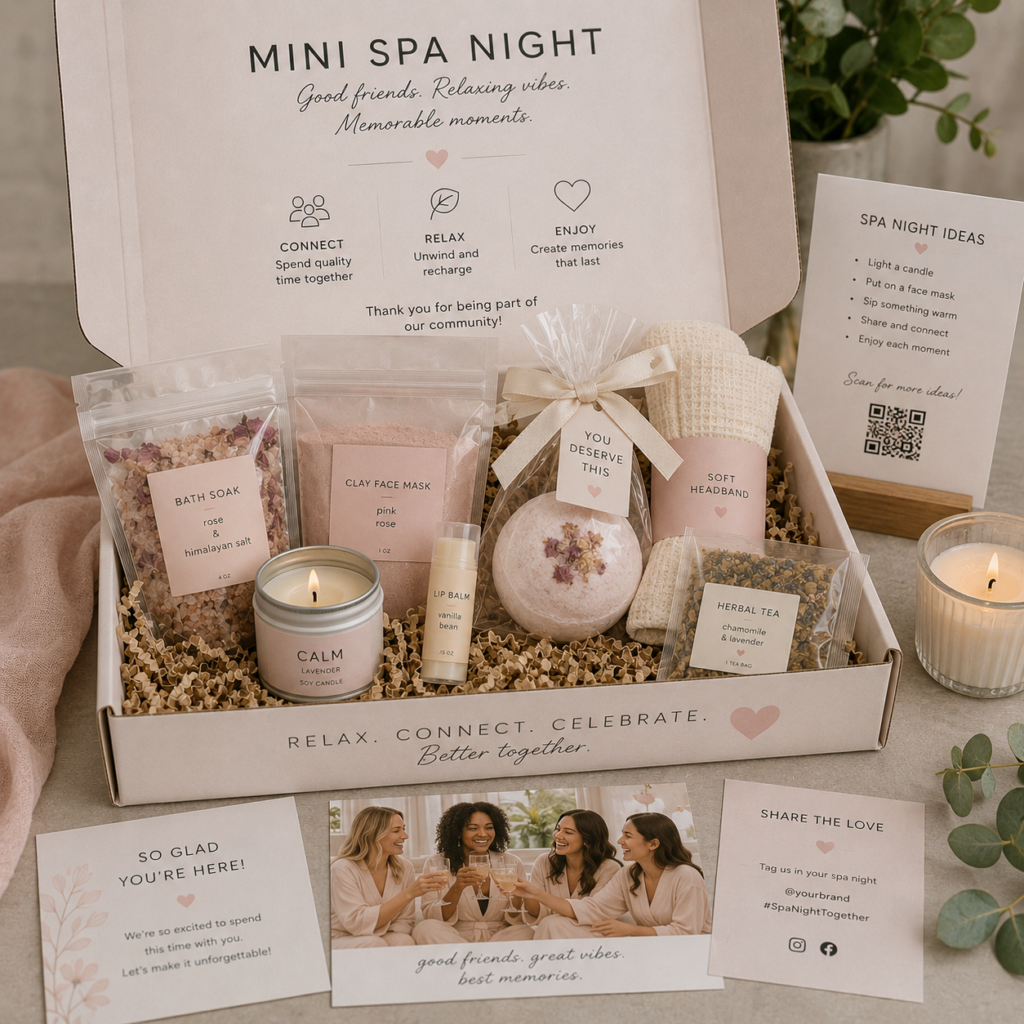
They help:
- Strengthen relationships (customer-to-brand and customer-to-customer)
- Encourage group participation and repeat engagement
- Position your brand as part of meaningful moments
Common use cases:
- Food & Entertaining: Ice cream kits, charcuterie kits, cocktail kits
- Health & Beauty: Self-care kits, spa kits, or wellness bundles
- Events & Weddings: Welcome kits, bridal party kits, emergency kits
- Seasonal & Gifting: Holiday activity kits, “sunshine boxes,” or themed party kits
For example, a wedding planner might provide welcome kits for guests, while a beauty brand could offer a “mini spa night” kit designed for small group experiences.
Best practices:
- Design with the end experience in mind (group size, setting, occasion)
- Use packaging to organize and elevate the presentation
- Consider scalability for events or bulk distribution
Opportunity:
Position your business as a kit enabler by supplying both the products and the packaging needed for customers to build their own experiences.
Expanding Your Offering with Kit-Based Solutions
Many traditional gift sets can be repositioned as kits with a simple shift in intent.
For example:
- A jewelry set becomes a “design-your-own” kit
- A skincare bundle becomes a guided self-care routine kit
- A box of treats becomes a build-your-own dessert kit
This shift adds perceived value by introducing interaction, not just consumption.
Additionally, businesses can:
- Sell pre-assembled kits directly to consumers
- Provide bulk components and packaging for customers to assemble
- Offer private-label or customizable kit programs
Packaging: The Foundation of Every Kit
No matter the category, packaging plays a critical role in kit success. It must do more than contain. It should organize, protect, and enhance the user experience.
Effective kit packaging should:
- Keep components secure and easy to access
- Support the sequence of use (especially for activity kits)
- Reflect your brand and the intended experience
Clear packaging, boxes, pouches, and resealable bags are all commonly used to create structure and visibility within kits.
Why Kits Work
Kits succeed because they combine three powerful elements:
- Functionality – They serve a clear purpose.
- Engagement – They invite participation.
- Experience – They create memorable interactions.
For businesses, this translates into stronger customer relationships, increased product exposure, and new revenue opportunities.
Start Building Your Kit Strategy
Whether you’re introducing a new product line, hosting an event, or looking to differentiate your offering, kits provide a flexible and scalable solution.
Start by identifying:
- What experience you want to create
- Which products support that experience
- How packaging can bring it all together
With the right approach, a kit becomes more than a collection of items. Kits become a reason for customers to engage, return, and share.
